
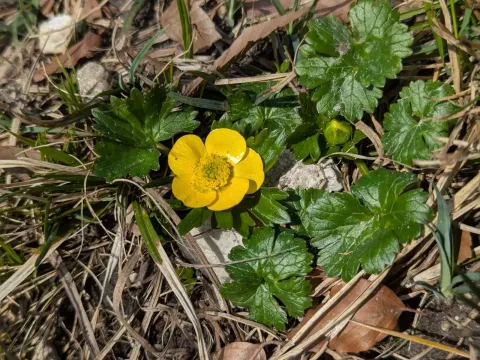
Mountain buttercup
Ranunculus montanus
Mountain buttercup (Ranunculus montanus) is a hardy perennial herbaceous plant belonging to the Ranunculaceae family. Native to mountainous regions, it is uniquely evolved to survive in rocky and alpine environments characterized by short growing seasons.
What the section contains
Mountain buttercup
The plant typically features a rosette of basal leaves and solitary, vibrant yellow flowers. In horticultural practice, it is highly valued for its suitability in rock gardens and alpine beds where soil drainage is prioritized over nutrient richness.
Success in cultivation requires a substrate that mimics its natural habitat: sandy or stony, well-drained, and slightly acidic to neutral. The soil should never remain waterlogged, as the roots are highly susceptible to rot during periods of high humidity.
Sunlight requirements include full sun to partial shade, depending on the latitude and local climate conditions. Ensuring adequate airflow around the plant is essential, as the species does not perform well in stagnant or overly humid air.
Temperature tolerance is a hallmark of this species, which is well-adapted to cold mountain winters. It does not require high levels of supplemental feeding, as excessive nitrogen can lead to weak growth and increased vulnerability to environmental stressors.
Fungal diseases are the primary threat to the health of the mountain buttercup. Root rot and damping-off, triggered by waterlogged soil, are common issues that can quickly kill an established plant if moisture levels are not managed effectively.
Pests such as aphids may occasionally colonize the foliage during the spring flush, causing leaf curling and reduced vigor. Monitoring for early signs of infestation allows for mechanical removal before chemical interventions are necessary.
Soil-borne larvae and various insects can cause damage to the root system, which is often difficult to detect until the plant begins to wilt. Improving soil structure and avoiding mulch that stays damp against the crown helps minimize these risks.
Preventative measures are essential, such as ensuring sufficient spacing between plants to encourage evaporation and air movement. Removing any plant debris around the base of the plant is vital to prevent the buildup of fungal spores.
Regular sanitation of gardening tools is strongly recommended when dividing or working with these plants to prevent the cross-contamination of viral or bacterial pathogens, which can be devastating in crowded alpine collections.