
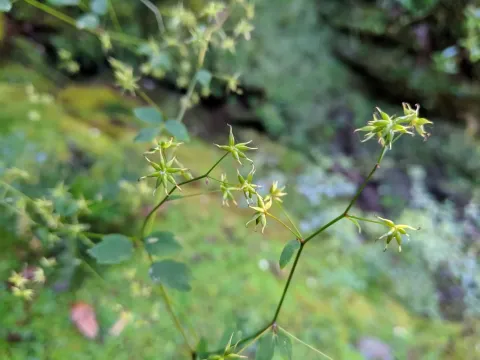
Javan meadow-rue
Thalictrum javanicum
Sowing seeds of Thalictrum javanicum is best done in late autumn to ensure natural cold stratification, which is critical for breaking seed dormancy and achieving uniform germination in spring.
What the section contains
Javan meadow-rue
Use a well-draining, sterile seed-starting mix. Surface-sow the seeds and press them lightly into the medium; do not bury them deeply, as they require light to stimulate the germination process.
Maintain consistent moisture in the trays. Covering them with clear plastic or glass can help create a greenhouse effect, provided there is enough ventilation to prevent fungal growth.
Once seedlings have developed at least two sets of true leaves, transplant them into individual pots to allow for sufficient root space before hardening them off for outdoor planting.
Division of established clumps is another viable propagation method. This should be performed in early spring or autumn to minimize transplant shock and encourage rapid establishment.
Javan meadow-rue performs best in partial to full shade. It is an ideal plant for woodland gardens where it can receive filtered sunlight rather than harsh, direct exposure.
The soil should be rich in organic matter, slightly moist, and neutral to slightly acidic. Heavy clay soils should be amended with compost or leaf mold to improve drainage and aeration.
Watering frequency should be adjusted based on local rainfall and temperature. While the plant appreciates moisture, it is prone to root rot if left standing in saturated, boggy soil.
Apply a thick layer of organic mulch around the base of the plant during the growing season. This practice mimics the plant’s natural habitat and helps regulate soil temperature.
Protecting the plant from strong, drying winds is essential. In exposed locations, planting it near windbreaks or larger shrubs provides necessary shelter and helps maintain humidity.
Powdery mildew is a common issue for many Thalictrum species, especially in environments with poor air circulation. Symptoms include a white, dust-like coating on leaves.
Management of fungal pathogens includes thinning out overcrowded stems to improve airflow and utilizing fungicide sprays if an outbreak occurs early in the season.
Aphids are frequent pests that congregate on tender new growth. They can be effectively managed with insecticidal soap or by introducing beneficial insects like ladybugs into the garden.
Slugs and snails can cause significant damage to the foliage, particularly in damp and shaded conditions. Implementing barrier methods or using organic bait can reduce their impact.
Regular monitoring of the foliage for yellowing or spotting is recommended. Early detection of stress factors allows for targeted intervention before the plant's vitality is compromised.