
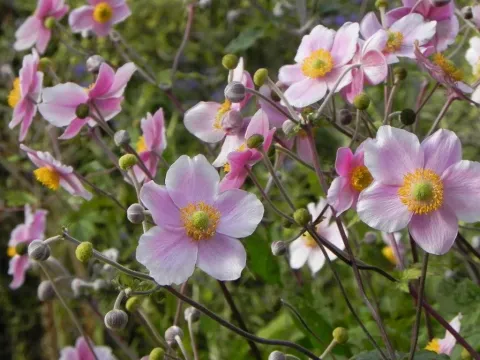
Japanese anemone
Anemone hybrids
The Japanese anemone (Anemone × hybrida) is a significant perennial herbaceous plant belonging to the Ranunculaceae family. It is a group of hybrids widely cultivated for their late-season flowering capabilities in temperate garden settings.
What the section contains
Japanese anemone
Successful cultivation requires a location with partial shade, protecting the plant from scorching midday sun. The soil must be fertile, humus-rich, and possess excellent drainage capabilities to prevent root saturation during dormant seasons.
Climatic requirements involve moderate moisture and protection from harsh winds. The plants thrive in zones where they are sheltered, allowing them to establish strong root systems in well-aerated, slightly moist substrates.
Agronomic practices include regular irrigation during dry spells and consistent mulching. Adding organic matter to the soil surface supports moisture retention and provides essential nutrients for vigorous development.
The primary horticultural use of this crop is in ornamental landscaping and as a professional cut-flower product. Its vertical growth habit and long-lasting blossoms make it a staple in autumn perennial borders.
Leaf nematodes are the most serious pest for Anemone × hybrida, often causing discoloration and severe leaf distortion. Infected foliage should be carefully removed and disposed of to prevent the spread of the pathogen.
Aphids can frequently infest flower buds, extracting sap and weakening the plant structure. Integrated pest management, including the use of mild horticultural soaps or insecticides, is recommended to manage infestations.
Fungal diseases, such as powdery mildew, often appear when plants are subjected to poor air circulation. Providing adequate spacing during planting significantly reduces the risk of these common pathogens.
Root rot is a common threat caused by waterlogged soil conditions, particularly in winter. Proper site selection and soil amendment are critical strategies to avoid this detrimental physiological condition.
Sanitation is key to preventing disease transmission within the garden plot. Removing dead plant matter at the end of the season helps reduce the overwintering population of pests and fungal spores.