
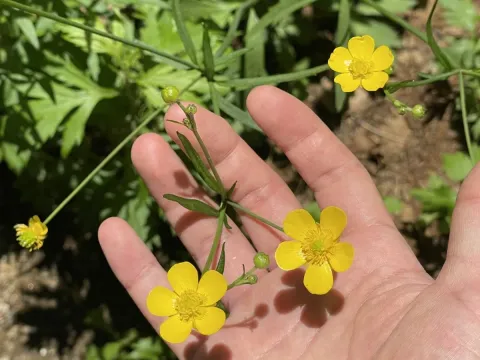
Japanese buttercup
Ranunculus japonicus
Japanese buttercup (Ranunculus japonicus) is a perennial herbaceous plant belonging to the Ranunculaceae family. It is native to East Asia, where it typically inhabits moist meadows, forest edges, and the banks of streams, demonstrating high adaptability to damp environmental conditions.
What the section contains
Japanese buttercup
The plant thrives in fertile, well-draining yet moisture-retentive soils with a slightly acidic to neutral pH. While it is quite hardy, providing a location with partial shade or filtered sunlight helps maintain the vibrancy of its foliage during peak summer heat periods.
Botanically, it features basal leaves arranged in a rosette and branching stems that carry striking yellow flowers. Its root system is relatively shallow but fibrous, allowing the plant to absorb nutrients efficiently from the top layers of moist soil, which is essential for its spring development.
Cultivation practices for this species include consistent watering and weed control, especially during the establishment phase. It responds well to organic fertilization applied early in the growing season, which supports robust plant health and ensures a prolonged period of blooming.
In terms of agricultural and landscape usage, Japanese buttercup is highly valued for its ornamental appeal. It is commonly incorporated into rain gardens, bog gardens, or as a groundcover in shaded areas where typical turf grasses struggle to thrive due to excessive moisture.
Common plant health issues include fungal diseases such as powdery mildew or rust, which are often exacerbated by poor air circulation or overcrowding. Ensuring adequate spacing between plants is a primary cultural control method to reduce the risk of disease spread within the garden bed.
Pests like aphids and spider mites can occasionally affect the plant, particularly in sheltered or drought-stressed conditions. Integrated pest management strategies, such as monitoring populations and using targeted insecticidal soaps, are generally sufficient to manage these infestations effectively.
Gardeners should be aware that the plant contains protoanemonin, which can cause skin irritation upon contact. Wearing protective clothing is recommended during pruning or division of the plant to prevent potential allergic reactions or rashes caused by the sap.
Slugs and snails often pose a challenge during wet spring months, as they are attracted to the succulent, tender foliage. Implementing physical barriers, such as copper tape or crushed eggshells, can protect the plant without the need for toxic chemical pesticides in the garden.
To keep the plants vigorous, annual maintenance involving the removal of dead foliage at the end of the season is necessary. This practice not only keeps the garden neat but also removes potential overwintering sites for pathogens and insect eggs, promoting healthier growth for the next year.