
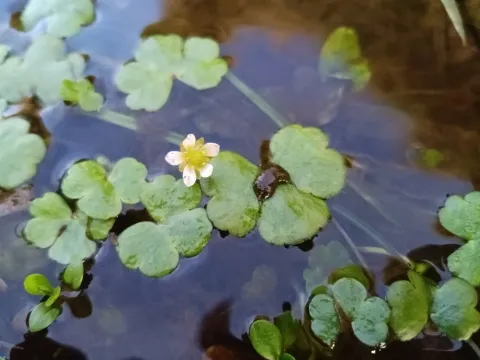
Ivy-leaved water-crowfoot
Ranunculus omiophyllus
Ivy-leaved water-crowfoot (Ranunculus omiophyllus) is a perennial aquatic herbaceous plant belonging to the Ranunculaceae family. It is distinct from other buttercups due to its preference for shallow water and its unique leaf structure, which resembles that of an ivy plant.
What the section contains
Ivy-leaved water-crowfoot
Botanically, the plant features creeping, succulent stems that often root at the nodes. The leaves are typically rounded with lobed margins, and the flowers are small and white, providing a striking contrast to the yellow-flowered species commonly associated with this genus.
The native range of this species is primarily located in Western and Southern Europe. It thrives in various moist habitats such as stagnant shallow ditches, mudflats along streams, and nutrient-rich, slow-flowing water bodies where the substrate is predominantly silty or peaty.
Regarding environmental requirements, the plant demands high moisture levels consistently. It is well-adapted to acidic conditions and requires a high water table throughout the growing season. Full saturation is essential, as the species does not possess specialized mechanisms to survive prolonged drought.
While not a traditional agricultural crop, the species is valued in ecological restoration projects. Its role is focused on water stabilization and phytoremediation, as it helps filter excess nutrients from shallow water environments, preventing the eutrophication of small ponds and irrigation channels.
The primary threats to this plant involve habitat loss due to drainage or the over-enrichment of water bodies with fertilizers. While generally robust, the plant can suffer from fungal infections when stagnant water conditions are combined with high summer temperatures or pollution, leading to stem decay.