
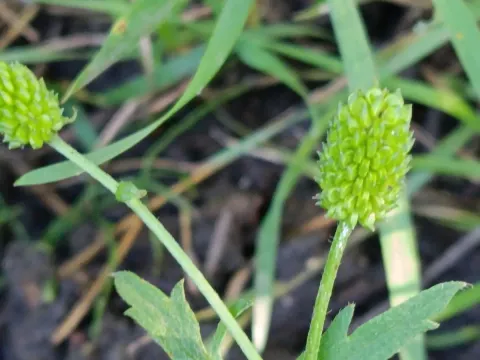
Chinese buttercup
Ranunculus chinensis
Chinese buttercup (Ranunculus chinensis) is a perennial herbaceous plant belonging to the Ranunculaceae family. It is widely distributed across parts of Asia, where it is valued for its specific chemical composition and adaptability to local climates.
What the section contains
Chinese buttercup
Cultivation begins with seed selection and preparation. Seeds require a well-prepared seedbed that is free of debris and weeds to ensure optimal germination rates in the early spring season.
Sowing depth is critical for this species; seeds should be placed no deeper than 1–2 cm to ensure they receive adequate light and moisture to sprout efficiently without exhausting their energy reserves.
Row planting with spacing of approximately 30 cm is recommended to allow for adequate airflow and weed management. This spacing prevents overcrowding, which is a major factor in maintaining plant health.
Regular monitoring of soil moisture during the first month post-sowing is essential. The soil must remain consistently moist but not waterlogged to support the delicate root development of the young plants.
This crop thrives in environments with moderate humidity and full to partial sunlight. Excessive heat or direct exposure to intense midday sun can lead to leaf scorch and reduced yield.
Soil quality plays a vital role in successful production. Chinese buttercup prefers loamy or sandy-loam soils that are rich in organic matter and possess a neutral to slightly acidic pH level.
Proper drainage is non-negotiable. While the plant requires water, standing water or poor drainage will almost certainly lead to crown and root rot, which are lethal to the crop.
The optimal temperature range for development is between 15°C and 25°C. In regions with harsher climates, the plant may require protective covering during extreme cold periods to survive the winter dormancy.
Nutrient management involves applying balanced fertilizers during the active growth phase. Nitrogen helps in vegetative growth, while phosphorus and potassium support root strength and overall resilience.
Like many species in the Ranunculaceae family, Chinese buttercup is susceptible to various pests, including aphids and leaf miners, which can significantly damage the photosynthetic area of the leaves.
Powdery mildew is a common fungal disease that affects the plant when humidity levels are high and air circulation is poor. Proper spacing and removal of infected leaves can mitigate this threat.
Root rot pathogens represent the most serious threat to crop stands. These are often triggered by improper irrigation practices, specifically overwatering, which creates a habitat for anaerobic fungi.
Integrated pest management (IPM) should be employed to control outbreaks. This includes the use of biological control agents and targeted, environmentally safe chemical applications when thresholds are exceeded.
Sanitation practices after harvest are essential to break the life cycle of pests and diseases. Removing crop residues prevents the buildup of pathogens in the soil for the next growing season.
The harvest phase occurs during the peak flowering stage of the plants. Harvesting at this time ensures the highest concentration of bioactive compounds within the aerial parts of the crop.
Mechanical harvesting or manual cutting is performed, leaving a portion of the stem above the ground. This ensures the plant remains intact, allowing it to re-grow or overwinter effectively.
Speed is essential during the post-harvest phase. The biomass must be transported quickly to a processing area to prevent fermentation or degradation caused by heat and moisture.
Drying is performed in shaded, well-ventilated areas or specialized climate-controlled drying units. Keeping the temperature below 45°C preserves the integrity of the plant's essential chemical components.
Proper storage is the final step, involving dark, low-humidity environments to prevent moisture accumulation and mold growth, ensuring the product retains its quality for end-market use.