
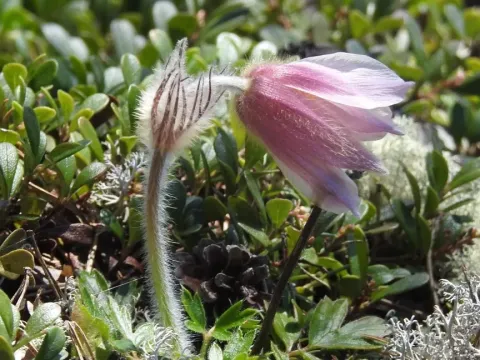
Spring pasqueflower
Pulsatilla vernalis
Spring pasqueflower (Latin: Pulsatilla vernalis) is a herbaceous perennial belonging to the Ranunculaceae family. It is natively found in the subalpine and alpine regions of Europe, where it thrives in sandy, stony soils often associated with coniferous forests and mountain meadows.
What the section contains
Spring pasqueflower
The plant features a sturdy taproot system and is covered with dense, soft hairs, which serve as an adaptation to harsh mountain climates. This pubescence protects the plant from freezing temperatures and significantly reduces water transpiration during the dry spring season.
In cultivation, success depends heavily on mimicking the plant's natural habitat. It requires extremely well-drained, acidic to neutral sandy soils. Any stagnation of water around the crown is fatal, making gravelly slopes or specialized rock garden soil mixes the best choices.
Sunlight is critical for the development of Pulsatilla vernalis. It is a heliophilous species that requires full sun exposure to reach its peak decorative potential. Because of its slow growth rate, it must be protected from aggressive weeds that could easily outcompete it.
Beyond its ecological value, the spring pasqueflower is prized for its exquisite ornamental flowers. It is widely used by landscape architects in rockeries, alpine gardens, and xeric landscaping, where its unique visual texture and hardiness make it a standout choice.
The primary threat to the spring pasqueflower is root rot, triggered by excessive moisture or poorly drained soils. Because the plant is accustomed to fast-draining alpine conditions, waterlogged roots will quickly succumb to fungal pathogens.
Pests such as aphids and leaf-eating beetles may occasionally target the foliage, causing localized damage. Monitoring the plant during the early growth phase and maintaining proper spacing can help prevent the rapid spread of insect populations.
Fungal diseases, specifically gray mold (Botrytis), can become problematic during cool, humid periods in early spring. To mitigate this, gardeners should ensure proper air circulation and avoid overhead watering that keeps the foliage consistently damp.
Improper winter maintenance, such as leaving heavy leaf litter around the crown, can lead to rotting. It is generally recommended to keep the area around the base clean and ensure the crown of the plant stays dry during the dormant season.
To keep the plants healthy, regular weeding and the maintenance of a mineral mulch layer are recommended. This protects the plant from weeds while ensuring the crown remains above the moisture line, providing an environment hostile to common root-infecting pathogens.