
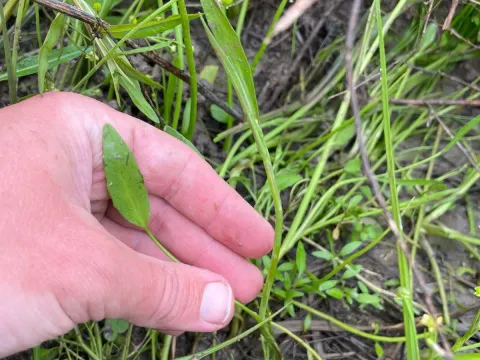
Spearwort
Ranunculus pusillus
Spearwort (Ranunculus pusillus) is a herbaceous plant species within the Ranunculaceae family. It is distinctively adapted to wetland ecosystems, playing a role in hydrological site assessment for agricultural land management.
What the section contains
Spearwort
The plant originates from regions where riparian habitats and seasonal wetlands are common. In an agricultural setting, its presence is a diagnostic feature indicating soil drainage issues and the need for water management improvements to support traditional crops.
Botanical morphology is characterized by slender stems and simple leaves, which are well-suited to semi-aquatic conditions. Its root system is relatively shallow, making the plant sensitive to mechanical soil disruption and competition from deeper-rooting species.
Environmental requirements focus heavily on moisture levels; the species thrives in saturated, nutrient-rich soils. It can tolerate periodic flooding, a trait that often results in it outcompeting more sensitive agricultural crops in low-lying field areas.
Agronomic management of land infested with Ranunculus pusillus typically requires systematic drainage infrastructure. Enhancing soil aeration and implementing robust crop rotation cycles are essential to shift the ecological balance away from this moisture-dependent species.
The plant contains compounds that can be toxic to livestock if ingested in significant quantities. This poses a threat to grazing pastures, requiring proactive management to ensure forage safety and prevent potential health issues in cattle or sheep.
From a phytosanitary perspective, it may host various fungal pathogens, including powdery mildew and leaf spot diseases. These diseases can easily migrate to neighboring cash crops, especially during seasons with prolonged rainfall or high humidity.
Pest pressure is frequently related to specialized insects that utilize the plant as a host. These pests may include various beetles and leaf-miners, which can cause significant defoliation and migrate to commercial plantings if not contained.
Control strategies involve a combination of chemical suppression and mechanical tillage. Due to the waxy cuticle on the leaves, the effectiveness of herbicides may be limited unless combined with appropriate adjuvants to ensure better uptake.
Integrated pest management protocols emphasize the importance of monitoring moisture-prone areas of the field. Early detection and targeted intervention are the most effective ways to mitigate the spread of both the plant and the associated biological threats.