
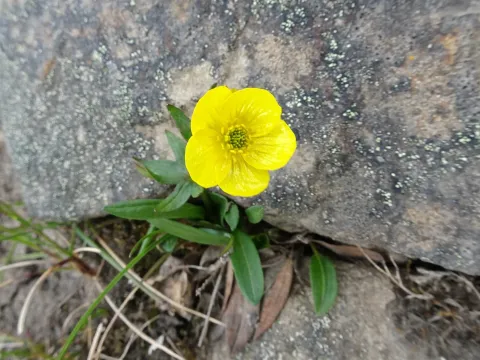
Snow buttercup
Ranunculus nivalis
The Snow buttercup (Ranunculus nivalis) is a perennial herbaceous plant belonging to the Ranunculaceae family. This species is native to the circumpolar arctic and subarctic regions, as well as high-altitude alpine zones across the globe.
What the section contains
Snow buttercup
The plant is highly specialized for short growing seasons, typically found in moist, rocky tundra or near melting snowfields. Its evolutionary adaptation allows it to emerge and bloom rapidly as soon as the snow retreats, taking advantage of the fleeting Arctic summer.
Regarding soil requirements, the Snow buttercup demands well-drained, nutrient-poor, or gravelly substrates. It cannot tolerate waterlogging, as its root system is adapted to oxygen-rich, cold, and fast-draining mountain meltwater soils.
Botanically, it is recognized by its solitary golden-yellow flowers and dark, hairy sepals which are essential for thermoregulation. The dark hairs help absorb solar radiation, warming the reproductive organs during cool, cloudy weather conditions typical of its habitat.
In terms of cultivation, it is considered a niche crop primarily for specialized rock gardens and alpine plant collections. Successful propagation requires simulating these cool, high-light environments, making it a challenging but rewarding species for cold-climate enthusiasts.
The main threats to the Snow buttercup involve fungal pathogens that thrive in conditions of poor air circulation and excessive moisture. Root rot is a significant risk if the plant is grown in soil that stays wet for prolonged periods during the dormant season.
Insect pests include various types of soil-dwelling larvae and occasionally slugs, which may feed on the tender young leaves in garden settings. Furthermore, viral infections transmitted by vectors can lead to stunted growth and reduced vigor in greenhouse environments.