
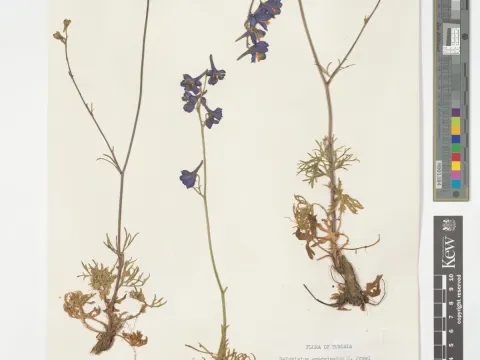
Delphinium emarginatum
Delphinium emarginatum
Delphinium emarginatum is a member of the Ranunculaceae family. It is a perennial herbaceous plant native to rocky, mountainous regions of the Iberian Peninsula, characterized by its adaptation to alpine-like conditions.
What the section contains
Delphinium emarginatum
The plant thrives in well-draining, slightly acidic to neutral soils. It is critical to ensure that the site does not hold standing water, as the roots are highly susceptible to rot under waterlogged conditions.
In terms of climate, it prefers full sun exposure with some light shade in the afternoon during exceptionally hot weather. Regular but moderate irrigation is required during the growing season to support the formation of its characteristic vibrant flowers.
Botanically, this species is noted for its compact growth habit, typically reaching 30 to 60 cm in height, and its distinctively notched leaves. The inflorescence is a loose raceme featuring bright blue-violet flowers.
The primary use of Delphinium emarginatum is ornamental. It is a popular choice for rock gardens, border edging, and containers, where its unique color palette and manageable size add significant aesthetic value.
The most common health issues for this culture are fungal diseases, such as powdery mildew and various root rots, which are often exacerbated by poor air circulation and excessive moisture in the substrate.
Pests that frequently target this species include slugs and snails, which can cause significant damage to the foliage, and the delphinium miner fly, which affects the development of flower buds.
To mitigate disease pressure, gardeners should apply systemic fungicides when necessary and ensure proper spacing between plants to maximize airflow through the foliage canopy.
Effective pest management involves regular cleaning of the planting area to remove debris where slugs may hide, as well as using physical barriers or traps to protect young, succulent growth.
Care should be taken when handling this plant, as it contains toxic compounds (alkaloids) common to the Delphinium genus, making gloves advisable to prevent skin irritation.