
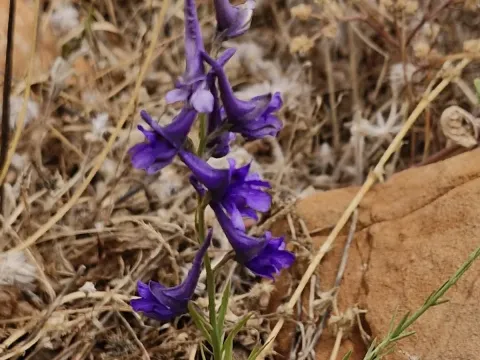
Delphinium halteratum
Delphinium halteratum
Delphinium halteratum is an annual herbaceous plant belonging to the Ranunculaceae family. In an agricultural context, it is typically classified as a weed species that infests grain crops and pasture lands throughout its range.
What the section contains
Delphinium halteratum
The reproduction cycle depends entirely on seed germination. Seeds remain viable in the soil for several years, forming a seed bank that ensures the species' presence even after aggressive seasonal removal efforts.
Germination usually occurs in early spring when soil temperatures reach optimal levels. The plant grows quickly, often outpacing the emergence of slower-growing crop varieties, which poses a significant challenge to farmers.
The root system is taproot-based, allowing the plant to reach deep soil moisture levels. This biological characteristic enables it to survive under arid conditions, making it particularly difficult to manage in dryland farming systems.
Agronomic management of sowing involves careful soil preparation. Mechanical cultivation before crop seeding can successfully eradicate the spring flush of seedlings, significantly reducing the competition for the main crop.
Delphinium halteratum thrives in open, sun-exposed areas. It shows a preference for calcareous and well-drained soils, reflecting its evolutionary adaptation to Mediterranean-like environments where water runoff is high.
While the species is drought-tolerant, it requires consistent moisture during the early vegetative phase to establish its structure. Excessive soil moisture or waterlogging is detrimental, often leading to root rot and stunted growth.
The plant performs well in regions with temperate climates. It is highly adaptable to various soil pH levels, provided the soil structure allows for proper aeration and drainage, which prevents the build-up of pathogenic soil fungi.
Regarding soil fertility, Delphinium halteratum is opportunistic. It responds positively to nitrogen fertilization, which can inadvertently increase its density within a crop field if the primary crop is not dense enough to suppress it.
Integrated weed management, including rotation with row crops, is highly recommended. This allows for inter-row cultivation and the use of targeted herbicides that cannot be used in cereal mono-cultures.
The primary concern regarding Delphinium halteratum is its toxic profile. Like many members of the Ranunculaceae family, it contains alkaloids that are poisonous to livestock, making contaminated forage a significant safety risk.
In field crops, the plant competes aggressively for nutrients and light. Yield losses can be substantial, as the weed creates dense patches that shade out crops, leading to thinner stands and lower grain quality.
Pest pressure on this species is generally low due to its natural chemical defenses. However, it can serve as a host for certain insects that may later migrate to adjacent commercial crops, complicating integrated pest management.
Diseases such as powdery mildew and leaf spots can affect the foliage during periods of high humidity. While these do not typically eliminate the weed, they can weaken the plant and potentially spread to neighboring plants.
Chemical control measures typically involve the application of selective herbicides during the seedling stage. For sustainable management, it is crucial to ensure that seeds are not harvested with the grain, as contamination of seed lots is a primary dispersal method.