
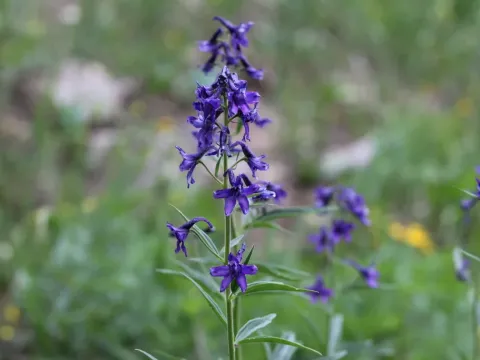
Barbey's larkspur
Delphinium barbeyi
Barbey's larkspur (Delphinium barbeyi) is a perennial herbaceous plant belonging to the Ranunculaceae family. Native to the high-elevation subalpine regions of the Rocky Mountains, it thrives in environments characterized by cool temperatures and significant precipitation during the growing season.
What the section contains
Barbey's larkspur
The plant exhibits a robust structure with a tall, erect stem often reaching over one meter in height. Its foliage is deeply divided, and the flowers are notable for their intense indigo-blue to deep violet coloration, arranged in dense, terminal racemes.
Agricultural success with this species depends on mimicking its high-altitude habitat. It requires cool soil temperatures and excellent drainage to prevent root issues, as the plant is adapted to moist but not waterlogged substrates typically found on mountain slopes.
Soil quality should ideally be rich in organic matter, with a neutral to slightly acidic pH level. Because the species is native to mountainous areas, it performs poorly in heat-stressed environments, necessitating protection from direct afternoon sun in warmer cultivation zones.
While often categorized as a desirable ornamental species, it is essential to note that all parts of the plant are highly toxic to livestock. Due to the presence of potent alkaloids, it is considered a problematic weed in grazing lands and should be managed accordingly.
The primary pathological threats to this species include various fungal infections, most notably powdery mildew and crown rot, which proliferate in stagnant or overly humid air conditions. Ensuring proper spacing and airflow between individual plants is critical for disease management.
Pest issues often involve slugs and snails, which can cause significant damage to the plant's delicate tissues during the early growth stages. Aphids may also appear on developing flower buds, necessitating physical or chemical control methods to preserve the integrity of the spikes.