
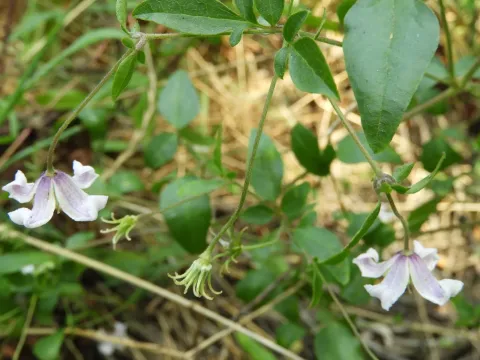
Bell-flowered clematis
Clematis campaniflora
The Bell-flowered clematis (Clematis campaniflora) is a vigorous perennial climbing plant belonging to the Ranunculaceae family. It is prized in horticulture for its rapid growth rate and delicate, bell-shaped flowers that bloom in clusters along the stems.
What the section contains
Bell-flowered clematis
Originating from Portugal, this species is well-adapted to Mediterranean-influenced climates. In gardens, it thrives in spots that offer partial shade to full sun, provided the root zone remains cool and protected from direct heat throughout the peak summer months.
The ideal growing medium is deep, well-drained, and nutrient-rich soil with a neutral to slightly alkaline pH. Proper soil preparation is critical, as the plant dislikes heavy, waterlogged soils that can easily lead to root rot issues.
Maintenance involves providing sturdy support structures, such as trellis or wire fencing, as the plant can climb to several meters in height. Regular watering is necessary during the establishment phase and during periods of prolonged drought.
Pruning is an essential aspect of Clematis campaniflora management. Since it blooms on new growth, it should be hard-pruned annually in late winter or early spring to encourage vigorous flowering and to maintain the plant's structural health.
The most significant pathological threat to this species is Clematis wilt, caused by fungi that infect the stem tissues and block nutrient flow. Immediate removal of affected stems and the application of systemic fungicides are the primary management strategies.
Powdery mildew is another common fungal issue, characterized by a white, powdery coating on foliage. It is most prevalent in areas with high humidity and poor air circulation, making proper pruning and spacing essential for disease prevention.
Insect pests, including aphids and spider mites, often target the tender shoots and leaves of the clematis. These pests can be managed through the application of horticultural oils or insecticidal soaps, combined with careful monitoring during the growing season.
Root-knot nematodes can also pose a serious threat in infested soils, causing stunted growth and poor health. Ensuring good soil structure and potentially using resistant varieties or soil solarization can mitigate these risks.
Maintaining high hygiene standards in the garden, including the disposal of debris and dead plant material, is crucial to reducing the overwintering population of various garden pests and pathogens.