
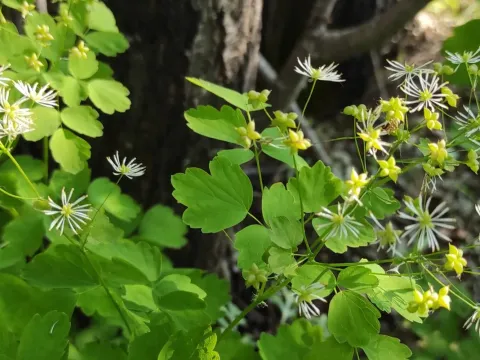
Baikal meadow-rue
Thalictrum baicalense
Baikal meadow-rue (Thalictrum baicalense) is a perennial herbaceous plant belonging to the Ranunculaceae family. It is native to the diverse landscapes of Eastern Siberia and Mongolia, typically found in meadow habitats and along forest edges.
What the section contains
Baikal meadow-rue
This crop thrives in well-drained, nutrient-rich soils that maintain moderate moisture levels throughout the growing season. The plant performs best in areas with partial shade, mimicking its natural forest-fringe environment, which protects the foliage from excessive heat stress.
Agronomic management involves maintaining soil structure to prevent compaction, which is essential for healthy root development. The species is highly cold-hardy, making it suitable for cultivation in regions with harsh winters and short, moderate growing seasons.
Regular weeding and careful irrigation management during the early establishment phase are vital for high-quality biomass production. Farmers should avoid heavy nitrogen fertilization, as it may negatively affect the concentration of secondary metabolites in the plant tissues.
The primary economic value of this crop lies in its pharmaceutical potential. It is utilized in the production of herbal supplements and medicines, particularly as a source of alkaloids like berberine, which are studied for their cardiovascular and therapeutic properties.
Common pathological threats include fungal infections such as powdery mildew, which often develop under high humidity levels or poor ventilation. Implementing a crop rotation strategy and ensuring adequate spacing between plants are essential preventative measures.
Insect pests, including various species of aphids and mites, can occasionally affect plant vigor. Integrated pest management (IPM) practices, emphasizing the use of biological controls, are recommended to maintain the purity of the medicinal raw material produced.