
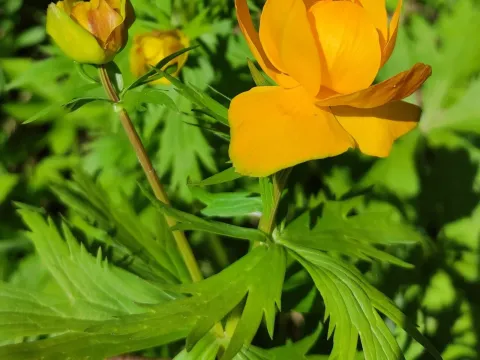
Asian globeflower
Trollius asiaticus
Sowing Asian globeflower seeds is best performed in late autumn to allow for natural cold stratification during the winter, which significantly improves germination rates in spring.
What the section contains
Asian globeflower
If spring sowing is planned, seeds must be artificially stratified in a refrigerator at temperatures between +2°C and +4°C for at least 8 to 12 weeks to break seed dormancy.
Seeds should be covered with a very thin layer of soil, no more than 1 cm deep, as they require consistent moisture to sprout effectively and avoid desiccation.
Seedlings are slow to develop and are typically kept in nursery beds or pots for the first year to ensure they are robust enough to withstand competition in the garden.
Transplanting should be handled with extreme care; Asian globeflower has a delicate root system and prefers minimal disturbance, so moving plants with a large soil ball is critical.
The Asian globeflower belongs to the Ranunculaceae family and is highly valued for its vibrant orange-yellow blooms that thrive in cool, moist environments.
This species originates from the damp meadows and open woodlands of Central Asia and Siberia, which dictates its preference for consistently moist, humus-rich soils.
While it appreciates sunlight, it performs best in partial shade, particularly in regions where summers are hot and dry, as intense heat can damage the foliage.
Soil pH should ideally be neutral to slightly acidic. Incorporating decomposed organic matter into the planting hole helps maintain moisture levels and provides essential nutrients.
Mulching the root zone is highly recommended to keep the soil temperature down and prevent moisture evaporation, ensuring the plant remains vigorous throughout the blooming season.
The main pests affecting Asian globeflower are common garden sap-suckers like aphids and spider mites, which tend to infest plants under heat stress or drought conditions.
Fungal diseases, such as leaf spot (Septoria), are common in poorly ventilated, overcrowded plantings where moisture remains on the foliage for extended periods.
Root rots caused by soil-borne pathogens are a significant risk if the planting site lacks proper drainage or if the soil becomes waterlogged for prolonged periods.
To mitigate these threats, gardeners should prioritize plant spacing, ensure good air circulation, and practice careful watering habits, focusing on the root base rather than overhead wetting.
In cases of severe infestation or infection, targeted use of fungicides or insecticides is necessary, ensuring products are applied according to safety guidelines to protect beneficial insects.