
Beesia
Beesia
Beesia is a small genus of perennial flowering plants belonging to the Ranunculaceae family. It originates from the high-altitude forest regions of China and Myanmar, where it thrives in moist and shaded environments.
What the section contains

Beesia
As a shade-loving species, Beesia requires consistent protection from intense direct sunlight. In a garden setting, it performs best under deciduous trees or in north-facing garden beds where humidity is stable and light is diffused throughout the day.
The plant demands humus-rich, well-drained, and slightly acidic soil. It is crucial to maintain moisture levels, especially during the active growth period, while avoiding waterlogged conditions that could lead to root rot.
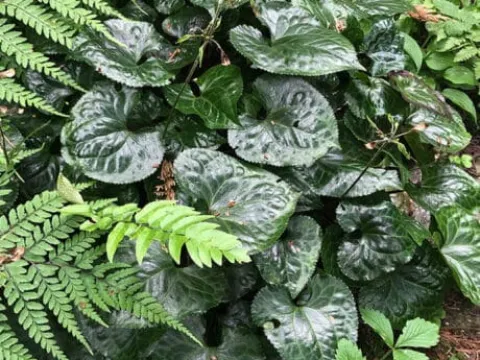
Morphologically, Beesia is distinguished by its attractive basal rosettes of cordate or deltoid-shaped leaves with distinct veining. The foliage is often the primary ornamental feature, complemented by slender racemes of small, white, or pale flowers that emerge in spring.
Hostile conditions are generally rare for this plant, as it is relatively robust in its natural habitat. However, it is primarily grown for its aesthetic appeal in woodland gardens or shade-loving plant collections, rather than for commercial agricultural production.
While Beesia is not prone to major agricultural pests, it may occasionally suffer from common garden threats. Slugs and snails are the primary concern for the foliage, especially in humid and shaded garden environments where the plant thrives.
Fungal infections can occur if soil drainage is insufficient or if air circulation around the rosette is restricted. Maintaining proper spacing and avoiding overhead watering helps to mitigate these risks effectively.