
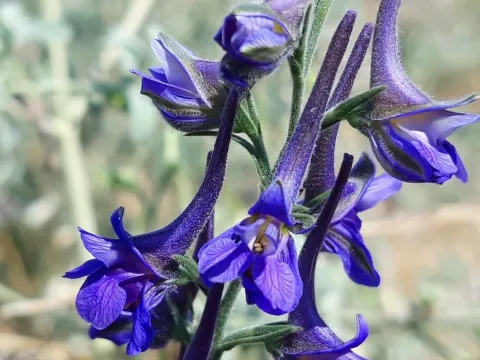
Balkan larkspur
Delphinium balcanicum
Sowing seeds of the Balkan larkspur is best performed in the autumn to allow for natural cold stratification in the soil. For spring sowing, seeds require prior refrigeration at approximately +4°C for at least one month to break dormancy and ensure high germination rates.
What the section contains
Balkan larkspur
Seeds should be sown at a shallow depth of about 0.5 cm, as they require a small amount of light to germinate effectively. Covering them with a thin layer of fine, moist substrate is essential to maintain steady humidity levels throughout the germination process.
When starting indoors, sow seeds in late February in well-drained seedling trays. Maintain temperatures between +15°C and +18°C, providing bright but indirect light to prevent the seedlings from becoming elongated and weak.
Transplant seedlings into individual pots once they have developed their first set of true leaves. This delicate phase requires careful handling of the root system to prevent transplant shock, ensuring the young plants have sufficient room to strengthen before moving outdoors.
Transplanting into the garden should occur after the final frost risk, spacing the plants 40–50 cm apart to ensure adequate airflow and room for the developing root mass.
The Balkan larkspur thrives in open, sunny locations, though it benefits from partial shade during the hottest parts of the day in warmer climates. Protection from strong winds is crucial, as the tall flower spikes can easily break if left exposed to harsh weather.
The species prefers fertile, well-drained loamy soils with a neutral to slightly alkaline pH. If the soil is acidic, applying lime is necessary to create the optimal environment for the plant to thrive and bloom to its full potential.
Consistent, moderate moisture is vital, especially during the peak growth and budding phases. Water should be applied directly to the base of the plant to avoid wetting the foliage, which helps prevent the development of fungal pathogens.
Applying balanced fertilizers starting from the second year supports vigorous growth, while phosphorus-rich fertilizers are recommended before and during the flowering season to encourage long-lasting, vibrant blooms.
Winter care involves cutting back the dead foliage to within 5–10 cm above the ground after the first frosts. In areas with severe winters and little snow, a layer of protective mulch or evergreen boughs is recommended to insulate the crown.
Powdery mildew is a common fungal threat, typically appearing as a white dusty coating on the leaves. Keeping the foliage dry and maintaining spacing between plants are the most effective cultural controls, supplemented by fungicides when necessary.
Bacterial leaf spot can also affect the plant, causing dark, necrotic lesions on the foliage. Removing and disposing of infected plant parts immediately is essential to prevent the disease from spreading throughout the entire colony.
The larkspur fly is a significant pest that targets the floral parts, causing damage that ruins the plant's aesthetic value. Regular scouting and the use of targeted insecticides during the early stages of bloom development can keep this pest in check.
Leaf nematodes can cause stunted growth and deformed leaves by interfering with the plant's vascular system. Ensuring that plant material is healthy from the start and maintaining vigorous growth helps the plants withstand potential infestations.
Snails and slugs are particularly problematic for young seedlings and tender spring shoots. Implementing perimeter barriers or using approved baits can provide necessary protection against these common garden pests during the early growing season.