
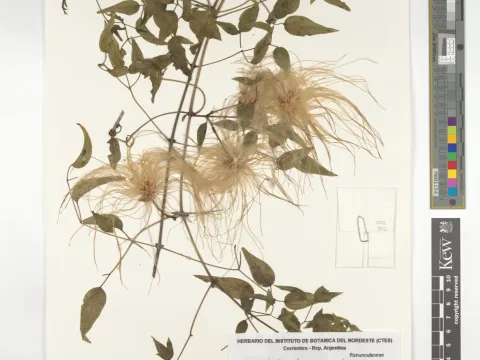
Montevideo clematis
Clematis montevidensis
The Montevideo clematis (Clematis montevidensis) is a perennial woody climber belonging to the Ranunculaceae family. It is native to South America, particularly regions near Montevideo, where it thrives in temperate to warm environments.
What the section contains
Montevideo clematis
This species requires well-draining, nutrient-rich soil with a neutral to slightly acidic pH. As a climbing plant, it needs robust support structures such as trellises or fences to allow its foliage to reach sunlight efficiently.
In terms of climatic conditions, it prefers environments with adequate humidity and protection from harsh, drying winds. While it is hardy in its native range, extra care should be taken to shield the base of the plant from intense solar radiation.
Agrotechnical practices involve consistent hydration, especially during the active growth phase. Applying organic mulch around the base helps retain moisture and keeps the roots cool, which is essential for the healthy development of this clematis.
The plant is primarily cultivated for ornamental purposes. Its ability to create dense vegetative screens makes it a popular choice for vertical landscaping in gardens and urban greening projects.
Fungal diseases are the primary concern for Clematis montevidensis, especially in conditions of poor air circulation or excessive soil moisture. Root rot and wilt are common issues that can lead to rapid decline.
Pest pressure mainly comes from aphids and spider mites during the warmer months. These pests feed on the leaves and young stems, which can stunt plant growth if not managed promptly.
Regular monitoring of the foliage is essential for early detection of pest infestations. Utilizing selective insecticides or horticultural oils can help manage populations without harming beneficial insects.
Sanitation practices, such as removing fallen leaves and pruning dead wood, play a critical role in disease management. Keeping the plant area free of debris reduces the habitat for potential pathogens.
Maintaining balanced soil fertility through controlled fertilization helps the plant withstand stress from both biotic and abiotic factors, ensuring long-term vigor.