
Montpellier buttercup
Ranunculus monspeliacus
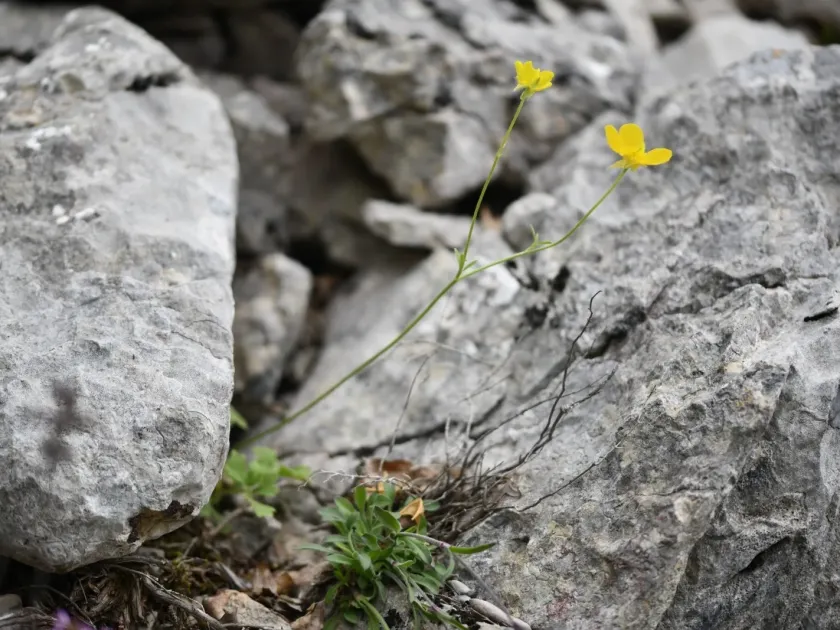
Description
Growing requirements
The Montpellier buttercup (Ranunculus monspeliacus) belongs to the Ranunculaceae family and is recognized as a distinctive perennial herbaceous plant within its natural range.
Its native distribution is primarily focused in the Mediterranean region, where it thrives in rocky grasslands and meadows that provide sufficient drainage and nutrient-rich soil.
To ensure optimal growth, this species requires specific soil conditions: well-draining, slightly neutral substrates are ideal, while heavy waterlogged soils should be strictly avoided.
Climate requirements include exposure to sunlight for most of the day, as the plant is adapted to the temperate cycles characteristic of southern European landscapes.
Regarding economic utility, the plant is valued for its aesthetic appeal in wildflower gardens rather than for agricultural production due to the toxicity typical of the genus.
Main diseases and pests
Fungal pathogens represent the most significant threat to the health of this species, specifically powdery mildew, which can compromise the photosynthetic surface under humid conditions.
Root rot is a common issue when soil aeration is insufficient, leading to rapid decay of the underground parts during the onset of the active growth phase.
Insects like aphids and spider mites can cause significant damage by feeding on young leaves, often leading to stunted growth or weakened plant vigor over time.
Gastropods, such as slugs and snails, are frequent pests in damp environments, often consuming succulent parts of the plant during the early stages of development.
Effective management strategies should focus on maintaining adequate space between plants to allow for airflow and monitoring for signs of infestation to prevent widespread damage.