
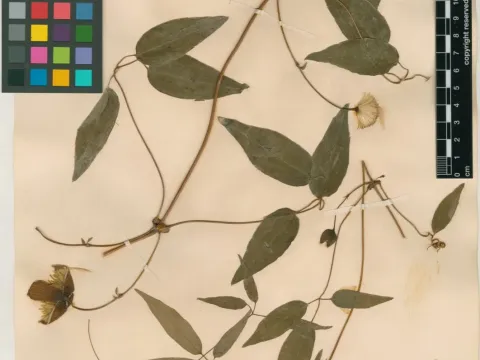
Clematis otophora
Clematis otophora
Clematis otophora is a perennial woody climber belonging to the Ranunculaceae family. It is distinct for its specific botanical morphology and serves as an excellent candidate for vertical gardening in temperate climates.
What the section contains
Clematis otophora
Native to China, this species thrives in locations where it can receive ample light while keeping its root zone shaded and cool. It is adapted to various growing conditions provided that the soil is sufficiently aerated.
Optimal growth requires well-drained, fertile soil with a neutral to slightly alkaline pH. Proper preparation of the planting site, including the addition of organic matter and a deep drainage layer, is essential to prevent root rot.
Agrotechnical practices focus on providing sturdy supports such as trellises or wires. Routine watering during the dry season is necessary, coupled with mulching to maintain consistent soil moisture levels throughout the summer.
In landscaping, this climber is utilized for covering fences, pergola structures, and walls. Its vigorous growth habit and attractive foliage make it a versatile tool for creating lush green partitions in private and public gardens.
The primary concern for Clematis otophora is fungal wilt, often referred to as clematis wilt. This condition causes sudden collapse of stems and is triggered by environmental stress and pathogens in the soil.
Powdery mildew is another common issue, especially in environments with poor air circulation or high humidity. Leaves may show white fungal patches, which can be mitigated by proper pruning and fungicide application.
Pests such as aphids and spider mites are frequent intruders that stress the plant by feeding on its sap. These pests proliferate in warm, dry weather and can be controlled with soaps or systemic insecticides.
Cultural control remains the best defense, including removing dead or diseased plant material and maintaining adequate plant spacing. This reduces the risk of spore transmission and keeps the plant canopy healthy.
Regular inspection is advised during the peak growing season to detect early signs of infestation. Integrated pest management strategies are highly recommended to keep the climbing vine in optimal condition throughout the year.