
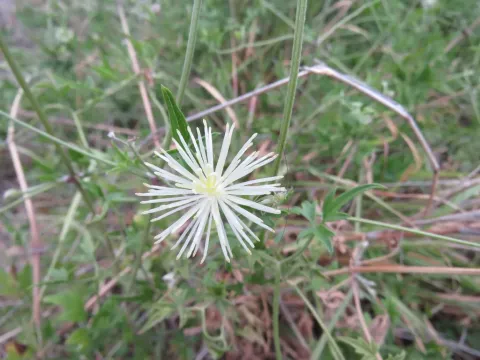
Drummond's clematis
Clematis drummondii
Drummond's clematis is best propagated by seeds planted in the autumn, allowing them to undergo natural stratification during the winter months.
What the section contains
Drummond's clematis
Spring sowing requires artificial cold stratification, which is essential to break seed dormancy and ensure uniform germination of the crop.
Seeds should be sown at a shallow depth of approximately 0.5 to 1 centimeter in a well-draining seed starting mix to facilitate optimal emergence.
Maintaining high humidity and a consistent temperature during the germination period is crucial for the successful establishment of young seedlings.
Once seedlings have developed several true leaves, they can be transplanted to larger containers or directly into the garden in well-prepared soil.
Drummond's clematis is a deciduous woody vine belonging to the Ranunculaceae family, characterized by its rapid growth and delicate appearance.
The plant thrives in full sun, which is necessary to stimulate abundant blooming and promote the maturation of the vine's woody stems.
Well-drained soil with a neutral to slightly alkaline pH is ideal, as this species is particularly sensitive to stagnant water and waterlogged conditions.
Providing structural support such as fences, trellises, or wire mesh is required, as the vine climbs using its sensitive leaf petioles.
Regular pruning and maintenance are necessary to manage the vigorous growth and prevent the plant from becoming tangled or excessively heavy.
The most common and severe problem for this species is wilt, a fungal disease caused by pathogens that clog the plant's vascular system.
Powdery mildew is a frequent issue, especially in environments with poor air circulation, resulting in unsightly white patches on the leaves.
Aphids and spider mites are common pests that feed on the sap of young shoots, often leading to stunted growth and leaf distortion.
Root nematodes can cause significant damage in sandy soils, requiring proper soil preparation and potential treatment with biological control agents.
Integrated pest management, including regular inspection and timely removal of infected plant parts, is the best strategy for maintaining vine health.