
Dwarf larkspur
Delphinium tricorne
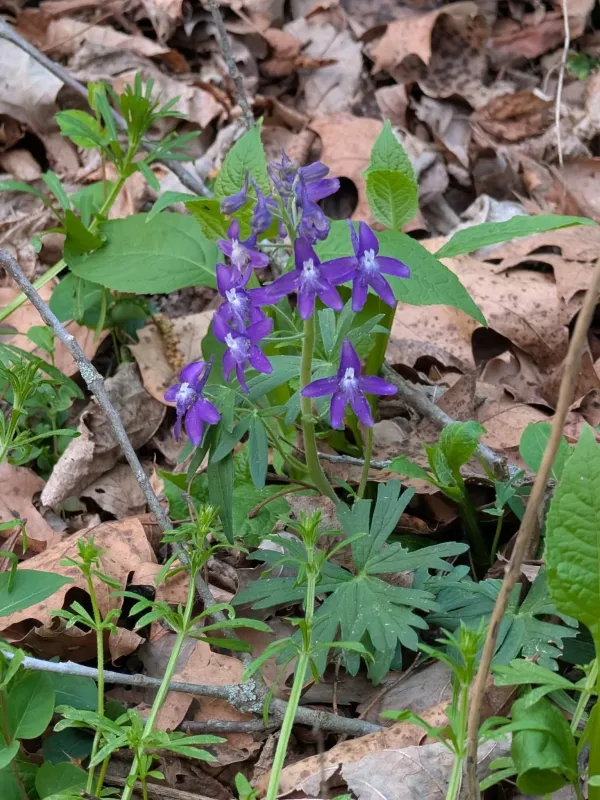
Description
Sowing dates
Delphinium tricorne, belonging to the Ranunculaceae family, is a spring ephemeral that completes its vegetative cycle early in the growing season.
In its native habitat, seeds disperse naturally upon maturity in late spring, immediately beginning a process of cold stratification in the soil.
For cultivation purposes, successful propagation requires sowing seeds in late autumn to ensure they undergo the necessary cold period for winter dormancy.
Surface sowing is recommended as the seeds are photosensitive and require light to break dormancy and stimulate germination in the early spring.
When starting in containers, keep the substrate moist and cool, simulating a forest floor environment to achieve higher germination rates for the crop.
Growing requirements
The plant thrives in humus-rich, well-draining forest soils with a pH ranging from neutral to slightly acidic, typical of woodland ecosystems.
Dwarf larkspur is highly adapted to shaded or semi-shaded locations, as it naturally grows under the canopy of deciduous trees in North America.
Consistent soil moisture is essential during the active growing phase, though the site must offer excellent drainage to prevent root rot during dormancy.
A natural mulch layer, such as leaf mold, is highly recommended to protect the tubers from fluctuating temperatures and to maintain stable soil humidity.
Protection from strong winds is advisable to keep the delicate flower stalks upright and to prevent premature drying of the surrounding soil.
Main diseases and pests
Powdery mildew is a common fungal threat that appears when environmental conditions become too humid or when air circulation is inadequate.
Root rot remains the most significant threat to the health of the plant, often resulting from poorly drained soil or excessive watering during the dormant phase.
Slugs and snails can cause severe damage to the foliage in early spring when the leaves are tender and the weather is moist.
Aphids occasionally target the flower spikes, draining the plant of its nutrients and causing potential wilting of the blossoms.
Maintaining proper spacing between plants is a critical cultural practice to reduce humidity levels around the stems and prevent the spread of fungal spores.
Harvesting
Seed harvesting should be timed precisely when the follicles begin to brown but remain closed to avoid natural seed scattering.
Deadheading or cutting back the flower stalks after flowering helps the plant allocate energy back into the root system for the next season.
Due to the toxic nature of the plant, including alkaloids in all parts, gardening gloves must be worn when handling or pruning this species.
Once collected, seeds should be dried in a cool, well-ventilated location away from direct sunlight to preserve their viability for future plantings.
Stored seeds should be kept in a dry, cool, and dark place to maintain maximum vigor until the following sowing season.