
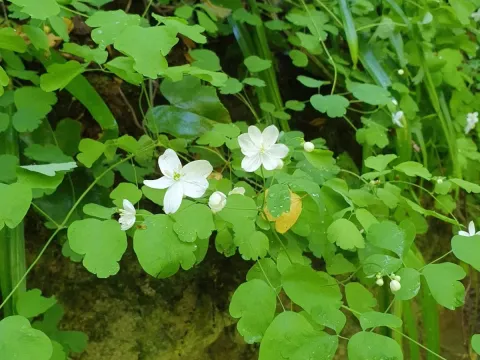
Eastern Meadow-rue
Thalictrum orientale
Eastern Meadow-rue (Thalictrum orientale) is a perennial herbaceous plant belonging to the Ranunculaceae family. Native to Eastern Europe and Western Asia, it typically thrives in forest clearings and along shaded rocky slopes, showing strong adaptation to moderate climates.
What the section contains
Eastern Meadow-rue
The plant features distinctively delicate, fern-like foliage and small, airy flowers arranged in panicles. It reaches a height of approximately 20 to 40 centimeters, forming an elegant cluster that is well-suited for various landscaping projects due to its compact habit.
For successful cultivation, Thalictrum orientale requires partial shade and a rich, well-draining soil. It is crucial to avoid waterlogged conditions, which can be detrimental to the rhizome system. Adding organic matter, such as compost or leaf mold, helps maintain the required soil fertility.
Agronomic care includes consistent irrigation during dry spells to keep the root zone slightly moist. While it is relatively low-maintenance, a balanced application of fertilizer during the early spring season supports healthy leaf development and flowering potential.
This species is primarily valued for its ornamental role in garden design, particularly in woodland gardens or shaded border settings. Its refined texture provides a beautiful contrast to broader-leaved perennials, making it a desirable plant for horticulturists.
Powdery mildew is the most common fungal disease affecting Eastern Meadow-rue, especially in humid and stagnant air conditions. Improving air circulation and maintaining proper spacing between plants are effective preventive strategies against this fungal pathogen.
Aphids often target the succulent new growth of the plant, potentially causing distortion of leaves. Regular monitoring and the application of insecticidal soaps or systemic pesticides are recommended if an infestation threshold is exceeded.
Spider mites can become a nuisance during prolonged periods of hot, dry weather. To mitigate this risk, it is important to provide sufficient moisture to the environment and ensure the plants are not stressed by drought conditions.
Root rot is a significant threat caused by overwatering or poor soil drainage. If symptoms of wilting appear without moisture stress, it is vital to inspect the root system and adjust irrigation practices immediately to prevent total plant loss.
Effective weed management is necessary to reduce competition for nutrients and water. Mulching around the base of the plant is recommended, as it suppresses weeds and helps maintain a stable moisture level for the root system throughout the growing season.