
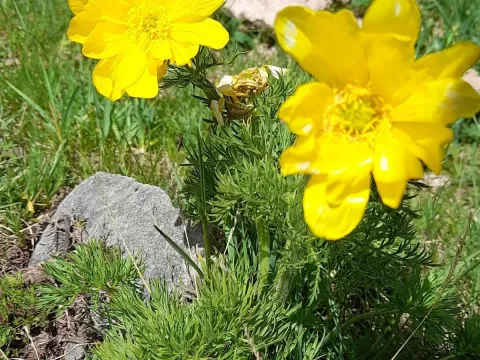
Pyrenean Adonis
Adonis pyrenaica
Seeds of the Pyrenean Adonis require a period of cold stratification to overcome dormancy, making autumn sowing outdoors the most effective propagation method.
What the section contains
Pyrenean Adonis
When sowing in containers, ensure the use of a gritty, well-draining seed compost and leave the pots outside during the winter to experience natural temperature cycles.
Germination can be erratic and may take several months, so it is essential not to discard the seed trays prematurely even if no sprouts appear by early spring.
Once seedlings are large enough to handle, they should be pricked out into individual pots before moving them to their permanent location in the garden.
Handling the seedlings with care is crucial, as the root system of this species is sensitive to disturbance during the early stages of growth.
As a member of the Ranunculaceae family, Adonis pyrenaica is adapted to high-altitude mountain environments, specifically the rocky limestone soils of the Pyrenees.
This plant thrives in full sun but prefers cool root runs, which can be achieved by planting it in a rock garden where stones provide natural cooling and moisture regulation.
The soil should be perfectly drained, neutral to slightly alkaline, and should not contain excessive organic matter that could hold too much moisture during winter.
While the plant is hardy and adapted to mountain climates, it requires protection from extreme summer heat in low-altitude gardens to prevent stress.
Watering should be managed carefully; provide consistent moisture during the growing season while ensuring that water does not sit around the crown of the plant.
The primary concern for the health of Pyrenean Adonis is root rot caused by poor soil drainage and stagnant water, especially during the dormant winter period.
Slugs and snails are the most common pests, as they are attracted to the succulent-like foliage during the early spring growth phase.
Fungal leaf spot diseases can occur if air circulation is poor, particularly in garden settings that are too sheltered or humid for this mountain species.
Maintaining a clean growing area by removing decaying leaves and debris helps minimize the risk of pathogen buildup in the surrounding soil.
If fungal issues arise, using appropriate systemic fungicides can help, but addressing the underlying environmental conditions remains the most effective control.