
Pygmy buttercup
Ranunculus pygmaeus
Description
Growing requirements
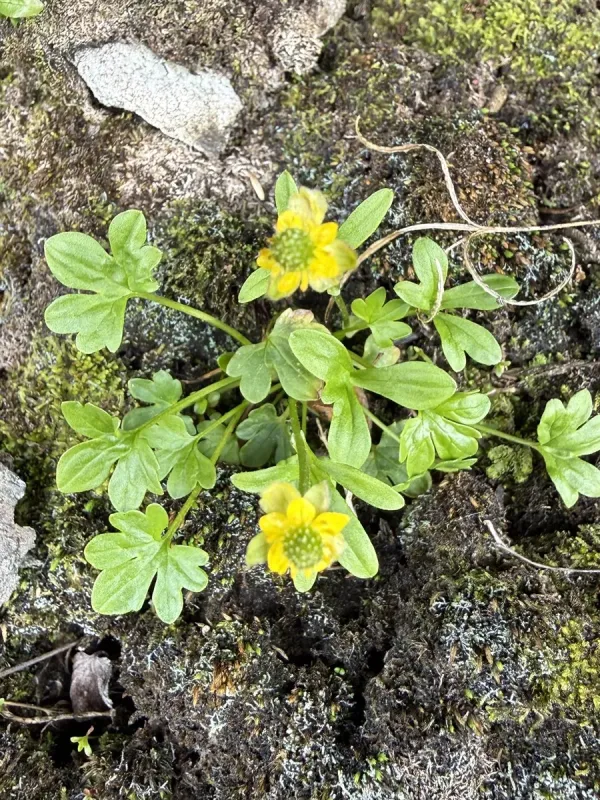
The Pygmy buttercup (Ranunculus pygmaeus) belongs to the Ranunculaceae family. It is a perennial herbaceous plant naturally occurring in the arctic tundra and high-altitude alpine regions of the Northern Hemisphere, where it thrives in cold and harsh environmental conditions.
Botanically, this species is noted for its diminutive stature, typically reaching only a few centimeters in height. Its structure is an evolutionary adaptation to tundra climates, allowing the plant to remain protected from high winds and freezing temperatures during the short growing season.
The species has very specific environmental requirements. It demands cool, humid conditions and cannot tolerate prolonged heat or drought. In a controlled cultivation setting, it requires specialized care, often mimicking the specific microclimates of arctic meadows or mountain slopes.
The soil for the Pygmy buttercup should be stony, well-draining, and rich in organic matter such as peat or moss. Ensuring a consistent moisture level is vital, while simultaneously preventing water stagnation, which can lead to rapid rot of the plant’s small root system.
Economic use of this plant is minimal, as it is primarily a species of scientific and botanical interest. It is occasionally kept by alpine plant enthusiasts in specialized gardens, though it remains a challenging subject due to its strict dependence on cold, stable climates.