
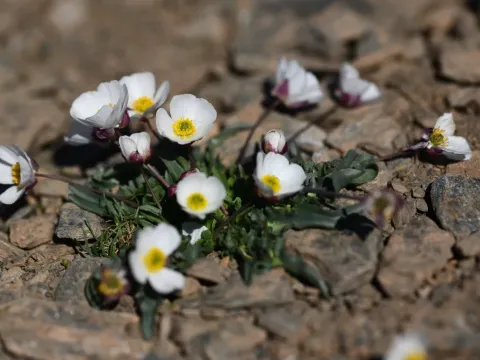
Ranunculus acetosellifolius
Ranunculus acetosellifolius
Ranunculus acetosellifolius is a distinctive member of the Ranunculaceae family, characterized by its specialized adaptation to high-altitude alpine environments.
What the section contains
Ranunculus acetosellifolius
The plant is native to the Sierra Nevada mountains in Spain, where it thrives in scree slopes and moist alpine grasslands at high elevations.
Botanically, it is recognized for its rosette of leaves that resemble sorrel, providing a unique architectural form among other alpine buttercups.
In terms of soil requirements, it demands well-drained, gritty substrates that mimic the mineral-rich, stony conditions of its natural mountain habitat.
Successful cultivation relies on maintaining cool conditions throughout the growing season and ensuring the plant does not suffer from extreme heat stress.
The species faces significant threats from fungal infections, particularly those triggered by poor drainage and waterlogged soil conditions during warmer periods.
Insects such as aphids or soil-dwelling larvae can pose a risk to the vegetative parts and roots, especially when the plant is already under physiological stress.
Competition from more aggressive alpine vegetation often limits the spread of this species in its natural habitat, requiring manual weeding in horticultural settings.
Environmental shifts and rising temperatures represent a long-term risk to the native population of this mountain-dwelling Ranunculus.
Proper nutrient management is crucial, as an excess of nitrogen can cause rapid, weak growth that becomes a magnet for secondary pest infestations.