
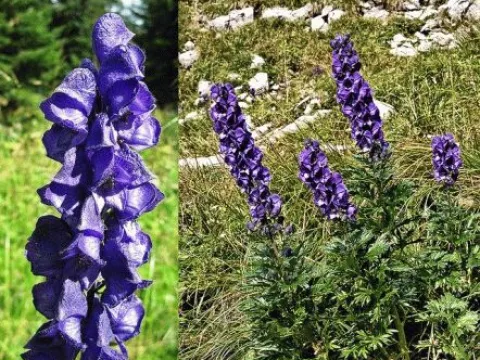
Purple monkshood
Aconitum violaceum
Seeds of Aconitum violaceum are typically sown before winter, as they require a long period of stratification to germinate successfully. In their natural habitat, seeds fall to the ground in autumn and endure the cold throughout the entire winter season.
What the section contains
Purple monkshood
Spring sowing significantly reduces germination rates, so seeds require artificial stratification in a refrigerator at 0–5 degrees Celsius for 2–3 months. Sowing is performed in a light, moist substrate at a depth of no more than 0.5–1 cm.
Initial seedlings emerge slowly and may appear unevenly, which is a biological feature of this species. Seedlings should be pricked out to their permanent location only after two or three true leaves have developed, taking care not to damage the sensitive root system.
The distance between plants when planting should be at least 30–40 cm, as the culture needs sufficient space for its powerful root system to develop. Young plants require regular watering and protection from direct midday sun during their first year.
Propagation is also possible by root division, which is carried out in spring or early autumn. During this process, it is critical to observe safety precautions: all parts of the plant, especially the roots, contain the alkaloid aconitine, which is an extremely dangerous poison.
Aconitum violaceum prefers partial shade, although it can grow in sunny areas provided the soil is sufficiently moist. An excess of direct sunlight suppresses the plant, causing premature yellowing of the leaves and a reduction in decorative value.
The plant has specific soil requirements: it must be nutritious, loose, and well-drained. The best results are achieved in loamy soils with a neutral or slightly acidic reaction that are rich in humus.
The culture reacts very negatively to waterlogging, so in heavy soils, it is mandatory to create a high-quality drainage layer of crushed stone or coarse sand. Water stagnation leads to rapid rotting of the root crown and the death of the plant.
This species is highly winter-hardy and capable of withstanding the harsh conditions of the high mountains from which it originates. In temperate climates, the plant does not require special winter protection, successfully enduring soil freezing.
Throughout the growing season, regular soil loosening and mulching of the root zone with organic materials are necessary. This helps maintain the required moisture level and suppresses the growth of weeds around the plant.
The main danger to purple monkshood is fungal diseases, such as powdery mildew, which often affects leaves during hot and dry summer periods. Prevention consists of maintaining optimal moisture levels and ensuring good ventilation for the plantings.
Leaf spot diseases are also possible, caused by excessive humidity and poor air circulation. Upon detecting symptoms, it is necessary to immediately remove damaged parts and apply systemic fungicides.
Among pests, aphids and spider mites can cause the most damage, sucking sap from young shoots and buds. Regular inspection of the bushes allows for the detection of pest colonies at an early stage and enables prompt intervention.
In some cases, nematodes can parasitize the roots, leading to weakened growth and leaf deformation. In such situations, infected plants must be dug up and destroyed, and the soil in that area should be treated with appropriate preparations.
Slugs and snails can damage young growth in spring by eating the tender leaves. To protect the plantings, barrier methods are used, such as scattering wood ash or crushed eggshells around the base of the bushes.