
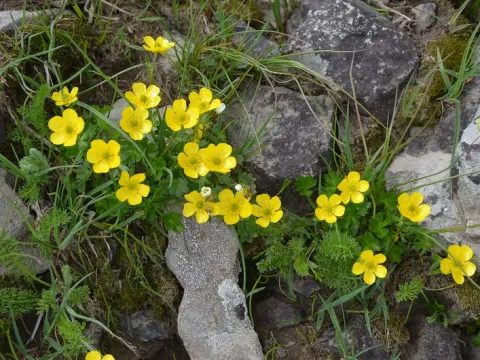
Ranunculus adoxifolius
Ranunculus adoxifolius
Ranunculus adoxifolius belongs to the Ranunculaceae family and requires specific conditions for propagation. Seed sowing is most successful when performed in late autumn, allowing for a natural cold stratification period.
What the section contains
Ranunculus adoxifolius
For spring sowing, seeds should be sown on the surface of a moist, well-draining substrate. Because the seeds are tiny, they should not be covered with a thick layer of soil, as light is often required for germination.
Vegetative propagation by dividing the rhizomes is a preferred method for established plants. This should be done during the dormant phase, typically in early spring or immediately after the flowering period ends.
When sowing in containers, maintaining a stable temperature between 15°C and 18°C is essential. Use a light, peat-based mix to ensure that the young root systems develop without resistance.
Hardening off young seedlings before transplanting into the garden is critical. Gradually expose the plants to outdoor conditions over the course of two weeks to prevent transplant shock.
The plant thrives in cool, moist, and well-drained environments, mimicking its natural high-altitude habitat. It prefers soil rich in organic matter that retains moisture without becoming waterlogged.
Light requirements are best met with partial shade or filtered sunlight. Direct exposure to intense midday heat should be avoided as it leads to leaf scorching and rapid soil evaporation.
Soil pH should ideally be neutral to slightly acidic. Incorporating compost or leaf mold into the planting hole helps improve soil structure and provides necessary nutrients for healthy growth.
Climatic preferences include temperate conditions. In regions with very hot summers, providing extra mulch around the root zone helps maintain the cool ground temperatures necessary for survival.
Regular maintenance involves keeping the area free of competing weeds. Mulching is highly recommended to suppress weed growth and help maintain constant moisture levels around the rhizomes.
Root rot is the most significant threat, often resulting from poor soil drainage or excessive irrigation. Once established, this fungal disease is very difficult to treat in perennial Ranunculus.
Pests like aphids and spider mites can become problematic during dry spells. These insects sap the plant's vitality, making it more susceptible to environmental stress and secondary infections.
Powdery mildew can affect the foliage in stagnant, humid air conditions. Ensuring proper spacing between plants is the most effective preventative measure against this fungal issue.
Monitoring for signs of discoloration on leaves or stunted growth is key to early detection. Prompt removal of damaged parts helps minimize the spread of potential pathogens to healthy sections.
Using integrated pest management strategies is encouraged. Avoid heavy chemical use, as this species may be sensitive to certain synthetic pesticides applied directly to the foliage.