
Alpine bistort
Bistorta vivipara
Description
Growing requirements
Alpine bistort (Bistorta vivipara) is a perennial herbaceous plant belonging to the Polygonaceae family. It is widely distributed across Arctic and alpine regions, showing remarkable adaptation to harsh, high-latitude environments.
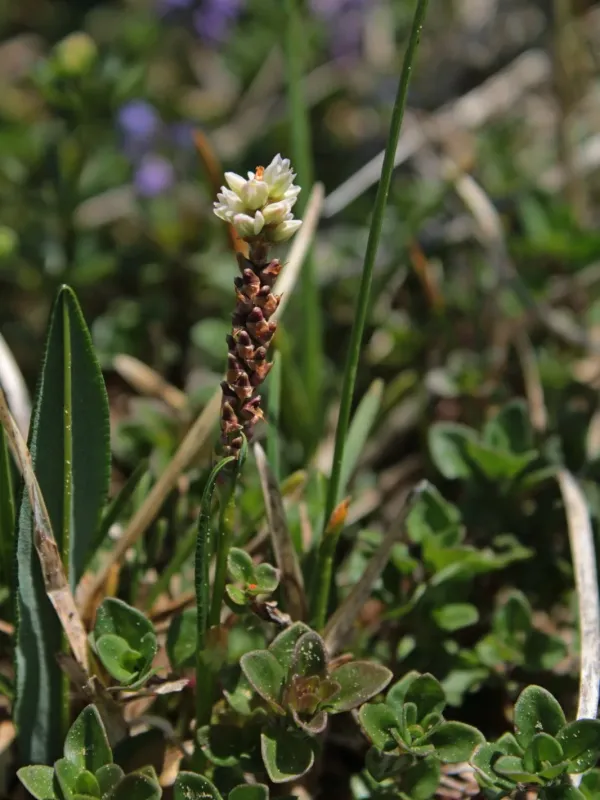
The plant is biologically unique due to its viviparous nature. It produces small bulbils in the lower part of the inflorescence, which act as clonal propagules. This mechanism ensures reproduction even in climates where the growing season is too short for successful seed maturation.
Regarding site requirements, this species favors well-drained, moist soils with high organic content. It thrives in open tundra, meadows, and rocky slopes where light competition is minimal. It generally performs poorly in shaded or densely vegetated habitats.
Climate adaptation is a key feature of this crop. It is highly resistant to frost and fluctuating temperature regimes characteristic of tundra ecosystems. The plant remains dormant during winter and rapidly initiates growth as temperatures rise above the freezing point.
From an agricultural and economic perspective, Alpine bistort is valued as a forage plant for grazing animals, particularly in northern territories. Additionally, its starch-rich rhizomes are historically used for human consumption and medicinal purposes.
Main diseases and pests
The primary threat to Alpine bistort populations is land degradation caused by overgrazing. Since the plant relies on consistent growth patterns, frequent disturbance of the soil and trampling can lead to population declines in sensitive areas.
Common pests include various insect larvae that feed on the foliage and bulbils. Fungal diseases, such as leaf rust, can occur if the local environment experiences prolonged periods of high humidity combined with poor air circulation.
The species may also face competition from invasive weeds or fast-growing colonizer plants that exploit soil disturbances. Maintaining a stable environment is crucial for the health and persistence of Alpine bistort stands.
Disease prevention revolves around managing moisture levels and avoiding soil compaction. Over-fertilization should be avoided, as it may decrease the plant's natural resistance to local pathogens and disrupt its relationship with symbiotic soil microorganisms.
Monitoring for signs of root rot or leaf spots is recommended in experimental cultivation sites. With proper management of the hydrological regime, the crop remains relatively robust against most common agricultural pathogens.