
Coccoloba krugii
Coccoloba krugii
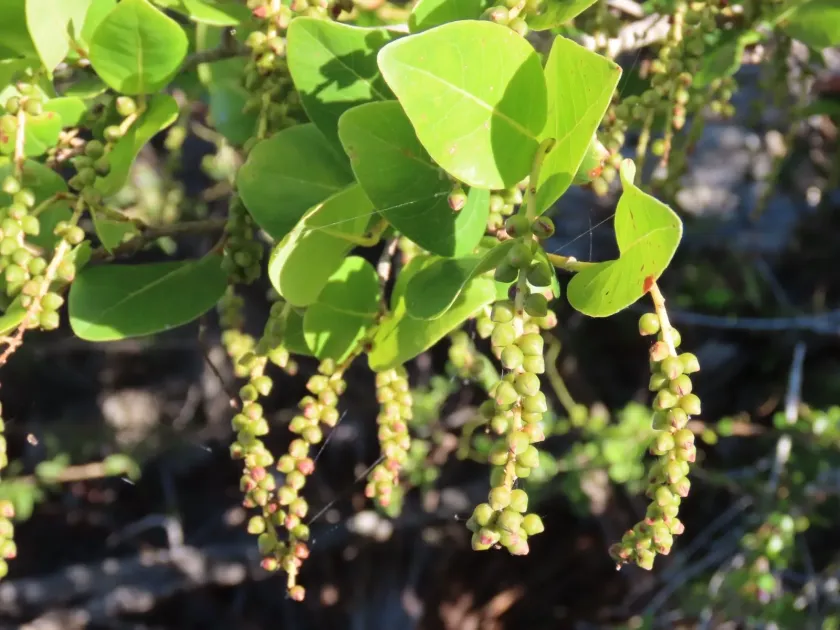
Description
Growing requirements
Coccoloba krugii is a woody evergreen plant belonging to the Polygonaceae family. Native to the Caribbean region, including the Bahamas and the Florida Keys, this species is naturally adapted to coastal shrublands and rocky environments.
The plant is highly resilient, capable of thriving in nutrient-poor limestone soils. It possesses a remarkable tolerance to salt spray and saline conditions, making it an excellent candidate for coastal restoration and urban landscape projects near the sea.
Regarding climate requirements, Coccoloba krugii demands full sun exposure to maintain its dense foliage and healthy growth habit. It is strictly limited to tropical and subtropical climate zones, as it lacks cold hardiness and cannot survive frost.
Successful cultivation requires a well-drained growing medium to prevent moisture retention at the roots. While the species is noted for its drought tolerance once established, consistent irrigation during the early development stages is essential for structural integrity.
In terms of practical use, it is valued as an ornamental shrub or small tree. Its compact form and durable leaves serve effectively as natural windbreaks or decorative hedges in residential and public landscaping within its preferred climate range.
Main diseases and pests
Fungal infections pose a significant threat to Coccoloba krugii, particularly in environments with high humidity and poor air circulation. These pathogens can cause leaf spot and branch dieback, which are managed through selective pruning.
Insect pests, including scale insects and mealybugs, are frequent offenders. These pests suck the sap from the plant, causing stunted growth and yellowing of the leaves if the infestation is not detected and treated early.
Spider mites are common invaders during dry, hot weather, potentially damaging the aesthetic appeal of the foliage. Regular monitoring and the application of mild horticultural oils or insecticides help in maintaining plant health.
Root rot is a major concern when the soil drainage is inadequate. Waterlogging leads to rapid decay of the root system, which is often irreversible if the plant is not replanted in a more porous substrate.
Maintaining a balanced nutrient profile is vital for the plant's defense mechanisms. Over-fertilization, especially with nitrogen, creates soft vegetative growth that is more susceptible to both pests and fungal outbreaks.