
Bistorta emodi
Bistorta emodi
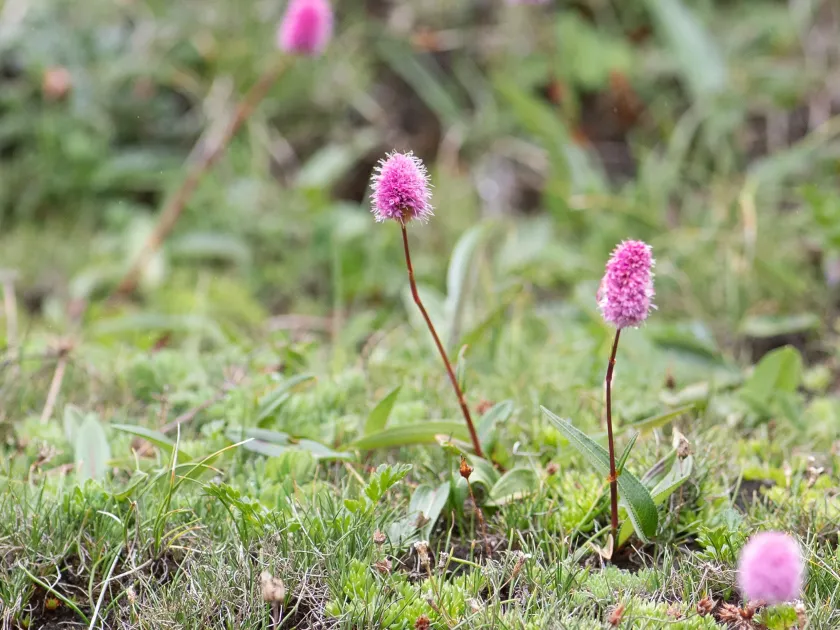
Description
Sowing dates
Cultivation of Bistorta emodi is primarily carried out via seeds during late autumn or early spring after mandatory cold stratification. To ensure uniform germination, seeds require a period of low temperatures lasting 30–45 days, mimicking the natural conditions of their native habitat.
For spring sowing, the soil must be well-warmed, and seeds should be planted at a depth of no more than 1–1.5 cm. It is crucial to maintain consistent moisture during the first weeks after sowing to prevent the surface soil layer from drying out, which could hinder early sprout development.
Bistorta emodi is a perennial herb of the Polygonaceae family known for its robust root system. The plant exhibits slow initial growth during its first year, making timely weed control and maintenance essential for its long-term health.
An optimal planting scheme for commercial production involves row spacing of 45–60 cm. This spacing provides adequate room for nutrient uptake and simplifies routine maintenance and field management throughout the vegetation cycles.
For smaller areas, vegetative propagation by dividing the rhizomes is frequently used, allowing for faster establishment of the crop. This method ensures high survival rates and provides superior uniformity across the plantation.
Growing requirements
The plant prefers moderately moist, fertile loamy soils with a neutral or slightly acidic pH. Bistorta emodi is highly sensitive to waterlogging, necessitating the selection of well-drained field sites to avoid root rot risks associated with low-lying areas.
Bistorta emodi adapts well to cool climates and exhibits significant frost resistance. In regions characterized by harsh winters, the rhizomes can easily survive deep soil freezing, retaining their vitality until the arrival of the spring growing season.
While the plant thrives in full sun, it can tolerate partial shade during the hottest hours of the day. Exposure to prolonged, intense sunlight may cause leaf scorching if the soil moisture levels are not managed effectively.
Fertilizer application should involve organic matter incorporated during autumn soil preparation. In spring, nitrogen-phosphorus fertilizers are recommended to stimulate vegetative biomass growth, which is critical for maximizing the yield of raw materials.
Particular attention must be paid to water management during the active growth and flowering phases. Regular irrigation during dry spells significantly boosts productivity and enhances the concentration of essential bioactive compounds in the plant tissues.
Yield
The economic value of Bistorta emodi lies in its high concentration of tannins, organic acids, and anthraquinones found in the rhizomes and foliage. Dry matter yields are highly dependent on the plantation age and the agronomic intensity applied.
Starting from the third year, the plantation enters its peak productivity period. On average, intensive farming practices can produce approximately 1.5–2 tons of dry marketable rhizomes per hectare under optimal conditions.
Harvesting is performed during phases when the concentration of beneficial components reaches its maximum. Depending on the intended market use, either the aerial parts (leaves) or the subterranean parts (rhizomes) are harvested based on specific protocols.
The quality of the final product is defined by its purity and the accuracy of the drying process. Utilizing modern dehydration technology allows for the preservation of the plant's natural chemical profile, meeting strict industrial standards.
The economic viability of the crop is driven by the steady demand for natural antiseptic and astringent botanical ingredients. The processed material finds wide application in the pharmaceutical industry and the production of dietary supplements.
Main diseases and pests
Bistorta emodi is generally resistant to many pathogens; however, poor field management can lead to powdery mildew outbreaks. This condition manifests as a white coating on leaves, which can inhibit the plant’s photosynthetic capacity.
In cases of soil saturation, the risk of root rot caused by Fusarium species increases significantly. Preventive measures should include improving soil drainage and strictly adhering to crop rotation practices to ensure long-term soil health.
Sucking insects and aphids can occasionally damage young shoots, potentially reducing overall yields. Integrated pest management, including authorized insecticides or biological controls, should be employed to mitigate these threats.
Nematodes affecting the root system represent another potential threat. It is vital to use only high-quality, disease-free planting material and perform soil disinfection before establishing a new plantation to avoid long-term issues.
Continuous monitoring of the crop is necessary for early detection and mitigation of problems. Regular inspections and the removal of affected plants are fundamental requirements for maintaining the overall health and vigor of the entire field.
Harvesting
Rhizomes are typically harvested in late autumn, coinciding with the senescence of the aerial parts. During this phase, the concentration of active nutrients and compounds in the roots reaches its peak, which is essential for pharmaceutical-grade quality.
The extraction process involves mechanized equipment, such as adjusted potato harvesters, set to the correct depth. Gentle handling during the harvest is crucial to minimize mechanical damage and reduce unnecessary product losses.
After excavation, rhizomes are cleaned of soil residue, washed thoroughly in cool running water, and trimmed of stems and small rootlets. This cleaning stage is a critical quality control point influencing the final market value.
Drying is performed in controlled environments at temperatures not exceeding 60 degrees Celsius. Adherence to strict thermal regimes prevents the degradation of valuable chemical components and ensures product stability.
Storage of the finished product requires a dry, dark, and well-ventilated warehouse. Keeping the material in appropriate breathable packaging ensures a long shelf life and the preservation of biological efficacy.