
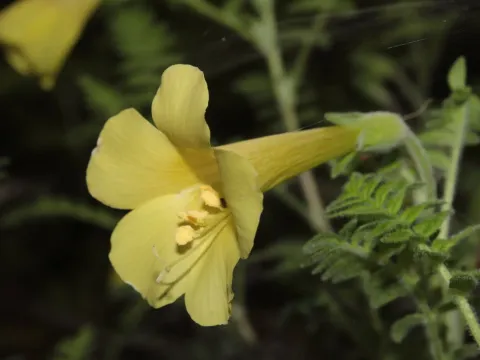
Polemonium pauciflorum
Polemonium pauciflorum
Polemonium pauciflorum, commonly known as few-flowered Jacob's ladder, is a perennial herbaceous plant belonging to the Polemoniaceae family. Successful cultivation requires careful site preparation and adherence to sowing timelines.
What the section contains
Polemonium pauciflorum
Seeds should be sown in autumn to allow for natural stratification or treated in cold storage prior to spring sowing. This process is essential to break dormancy and ensure a uniform germination rate across the field.
Seeds are broadcast or drilled at a shallow depth of approximately 1 cm, as they are small and prone to failure if buried too deeply. Maintaining consistent moisture in the surface layer is crucial for successful establishment.
Row spacing should be maintained between 40 and 50 cm to facilitate weed management and aeration during the vegetative growth phase. High-density planting should be avoided to prevent fungal issues.
Seedlings emerge within three weeks under optimal temperature conditions. Early growth is slow, requiring dedicated weeding during the first few months to prevent the crop from being outcompeted.
This species thrives in temperate climates and prefers well-drained, nutrient-rich soil with a neutral pH. Excessive moisture in the root zone must be avoided to prevent decay.
Polemonium pauciflorum performs best in areas with partial sun to light shade. Direct, intense sunlight in hot climates may cause leaf scorch and decrease overall biomass production.
Regular fertilization with balanced NPK formulas is recommended, especially focusing on phosphorus and potassium to support vigorous root system development in the second year.
Adequate water management is necessary; while the plant requires consistent moisture, the site must be free of standing water, which can lead to root system failure.
Proper ventilation between rows is vital to keep humidity levels in check, which helps in preventing the development of powdery mildew and other common leaf diseases.
The economic value of this crop is primarily derived from the harvesting of its rhizomes and roots, which contain active saponins used in pharmaceutical applications.
Yield capacity depends heavily on soil fertility and plant age. Harvesting is typically conducted after the second or third growing season to ensure maximum concentration of bioactive compounds.
Well-managed fields can yield approximately 1.5 to 2.5 tons of dried root material per hectare. Efficiency can be increased by managing nutrient delivery and preventing pest outbreaks.
Removal of flowering stalks during the active growth phase is a common practice intended to redirect energy into the roots, thereby improving the overall quantity and quality of the final harvest.
Grading the dried roots according to size and quality is an essential part of the post-harvest process to meet commercial standards for herbal medicine production.
Root rot is the most significant threat to Polemonium pauciflorum, particularly in poorly drained or waterlogged soils. Early detection and improved drainage are the primary preventive measures.
Insect pests, including aphids and spider mites, can damage leaf tissues. Regular monitoring is necessary to keep infestations below the economic injury level.
Fungal diseases like powdery mildew may arise during periods of high humidity and poor air circulation. Managing plant density and using appropriate fungicides is often necessary.
- Crop rotation is vital to prevent the buildup of soil-borne pathogens.
- Regular weeding to reduce competition and improve airflow.
- Integrated Pest Management (IPM) techniques for sustainable insect control.
Proactive monitoring of fields allows for the early identification of stressors, enabling growers to intervene before diseases compromise the root system of the crop.
Harvesting should occur during the dormant autumn period when the aerial foliage begins to wither. At this stage, the plant has effectively sequestered nutrients into the roots.
Mechanized equipment such as potato harvesters is effectively used to extract the root systems without causing significant damage to the plant structures.
Once extracted, roots must be washed thoroughly to remove soil and organic debris. Careful handling at this stage is crucial to prevent contamination and mechanical injury to the rhizomes.
Drying is performed in climate-controlled facilities at temperatures not exceeding 60 degrees Celsius to ensure the preservation of the volatile and bioactive medicinal components.
The final product should be stored in cool, dry, and well-ventilated areas, utilizing moisture-proof packaging to maintain long-term shelf stability and active ingredient potency.