
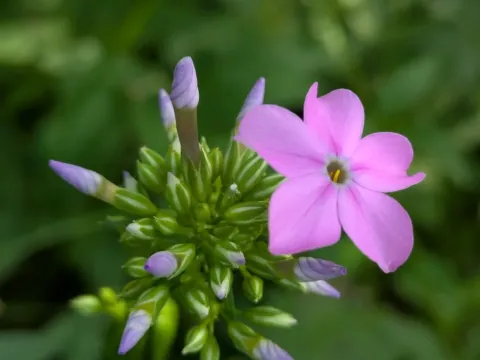
Smooth phlox
Phlox glaberrima
Smooth phlox (Phlox glaberrima) is typically propagated via vegetative methods such as division, as seeds require a prolonged cold stratification period to germinate effectively. The ideal time for dividing clumps is early spring or early autumn.
What the section contains
Smooth phlox
When using seeds, winter sowing in outdoor beds allows natural stratification to occur. Seeds should be sown at a depth of no more than 1 cm in well-prepared, loose soil to facilitate emergence in the spring.
Cuttings are taken in early summer using non-flowering shoots. These cuttings thrive in greenhouse conditions with high humidity and consistent temperatures, which promote rapid root development.
For transplanting, the soil should be enriched with organic matter. Proper spacing of 40–50 cm is essential to ensure adequate airflow, which is critical for reducing the risk of fungal diseases.
Watering immediately after planting is vital to establish root-to-soil contact. Regular maintenance during the first season ensures the plant successfully adapts to its new environment.
Belonging to the Polemoniaceae family, Smooth phlox is native to the wet prairies and open woodlands of North America. It is a hardy perennial adapted to varying temperate climates.
The plant performs best in fertile, moisture-retentive, and well-drained loam. It prefers soil with a slightly acidic to neutral pH level to optimize nutrient uptake.
Water requirements are significant during the growing season. While the plant can tolerate short dry spells, consistent soil moisture is necessary to maintain foliage health and bloom quality.
Smooth phlox is highly winter-hardy. In regions with severe frosts and little snow cover, applying a layer of organic mulch protects the rhizomes from temperature fluctuations.
While tolerant of partial shade, the plant displays its best growth and flowering density in full sun. Excessive shading often leads to weak stems and reduced floral display.
Powdery mildew is the most common concern for this species, characterized by a white powdery layer on the leaves. Increasing spacing and using preventative fungicides are recommended strategies.
Leaf spot diseases, caused by various fungal pathogens, may occur in overly humid conditions. Avoiding overhead irrigation helps minimize the risk of spreading fungal spores.
Stem nematodes are serious pests that cause stunted growth and twisted stems. There is no chemical cure for infested plants, so removal and destruction are necessary to prevent further spread.
Slugs and snails can cause significant damage to young foliage during wet weather. Implementing barriers or using biological control measures is effective in protecting the young plants.
Spider mites are frequently observed during hot and dry spells. Monitoring the undersides of leaves and utilizing insecticidal soaps or acaricides helps manage these infestations effectively.