
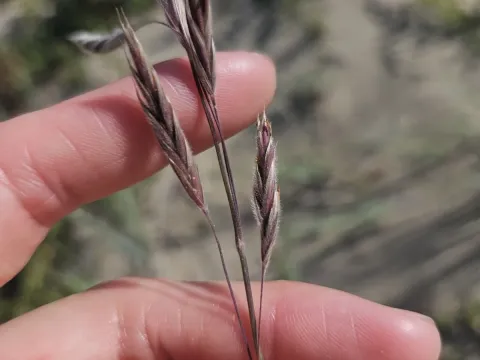
Pumpelly's brome
Bromus pumpellianus
The optimal sowing time for Pumpelly's brome is early spring, as soon as the soil is workable. In regions with long winters, late autumn sowing is also a viable practice, leveraging natural stratification for better germination.
What the section contains
Pumpelly's brome
Sowing depth should be maintained between 2 and 4 cm depending on soil texture. Lighter, sandy soils require deeper sowing to ensure moisture access, while heavier clay soils require a shallower approach to avoid burial.
Seed rates typically range from 10 to 15 kg per hectare. Precision seeders are recommended to achieve uniform distribution, which is critical for maximizing stand density and preventing weed encroachment.
Initial growth during the seedling year is relatively slow. Therefore, growers should focus on weed control before sowing and during the first months of the establishment phase.
Rolling the field immediately after sowing is a standard procedure to enhance soil-to-seed contact, which significantly improves the success rate of pasture establishment.
Pumpelly's brome (Bromus pumpellianus) is a cold-hardy perennial grass native to northern regions. It is well-adapted to harsh continental climates with significant temperature fluctuations and long, freezing winters.
This species is versatile regarding soil types, performing well on nutrient-rich chernozems as well as on drier, more marginal soils. It exhibits excellent tolerance to soil salinity compared to many other common grasses.
The plant possesses a deep, robust root system, allowing it to withstand seasonal droughts. However, it thrives best in well-drained soils and does not tolerate long-term waterlogging or flooding of the root zone.
Optimal pH levels for growth are between 6.0 and 7.5. In highly acidic environments, liming is recommended to improve the availability of phosphorus and other essential nutrients for the plant.
The species requires good light exposure to maintain high productivity. It is not recommended for planting in areas with heavy tree canopy cover, as shade reduces tiller development and overall longevity.
The forage yield of Pumpelly's brome typically reaches 2.5 to 4 tons of dry matter per hectare under good management conditions. Yields are highly responsive to nitrogen applications during the early spring.
Seed production yields range between 300 and 500 kg per hectare. Harvesting for seed requires careful management of nitrogen levels to prevent excessive vegetative growth at the expense of seed head development.
Productivity peaks during the third to fifth year after establishment. To maintain high yields in subsequent years, periodic fertilization and proper grazing management are necessary to prevent stand thinning.
The species is known for its strong regrowth capacity, commonly referred to as "regrowth" or "recovery rate." This allows for multiple cuts per season, provided that moisture levels are sufficient.
Forage quality remains stable if harvesting is performed at the booting stage. Delayed harvest results in lignification of the stems, which decreases the digestibility of the hay.
Fungal diseases such as rust (Puccinia spp.) and leaf spots are the most common pathological threats. These issues typically intensify during seasons with high humidity and poor air circulation.
Powdery mildew can affect stands in dense, over-fertilized areas. Management strategies include adjusting seeding rates and ensuring proper ventilation to keep the canopy dry.
Insect pests, including stem borers and various dipteran flies, may cause damage by feeding on stems or developing seed heads. Regular monitoring is essential to prevent economic loss.
Aphids can cause damage during the seed formation stage, directly reducing the yield and viability of the harvested seed lot if not managed through timely intervention.
Overall, Bromus pumpellianus is considered a hardy species with moderate resistance to many common grassland pests, making it a reliable choice for sustainable farming systems.
Hay harvest should ideally be conducted at the early heading stage. This timing captures the best balance between biomass volume and the nutritional density of the plant tissues.
For seed harvesting, a swathing method is preferred to allow the crop to ripen uniformly. Cutting should begin when approximately 80% of the seed heads show signs of maturity.
Direct combining is possible but risky due to the high susceptibility of the seeds to shatter upon reaching full maturity. Careful calibration of combine settings is necessary to minimize harvest losses.
After harvesting, seeds must be cleaned and dried to a moisture content of 12% or lower. Proper storage conditions, including cool and dry environments, are vital to maintain seed dormancy and viability.
Post-harvest management involves cleaning the stubble if intended for subsequent grazing or allowing the field to rest and accumulate nutrients for the next growing season.