
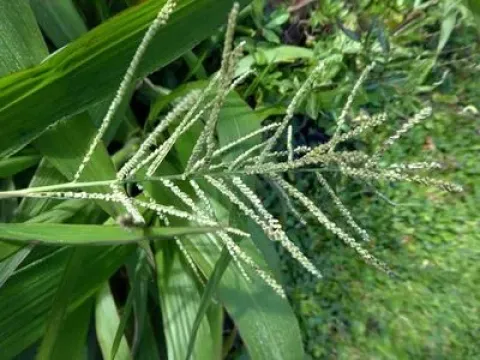
Paspalum paniculatum
Paspalum paniculatum
Paspalum paniculatum is a perennial herbaceous plant belonging to the grass family (Poaceae). Native to the tropical and subtropical regions of the Americas, it is widely recognized for its robust growth habit and ability to colonize various habitats.
What the section contains
Paspalum paniculatum
The plant features a dense tufted growth form with stems that can grow up to 1.5 meters tall. Its leaves are broad and lanceolate, while the inflorescence is characterized by an open, paniculate structure, which gives the plant its descriptive common name.
In terms of environmental requirements, this grass thrives in areas with consistent moisture and high light intensity. It is particularly valued for its tolerance to acidic and low-fertility soils where many other forage crops struggle to establish.
Agronomically, it is classified as a warm-season grass, requiring temperatures between 20°C and 30°C for optimal photosynthetic activity. It remains largely frost-intolerant, which restricts its cultivation to warmer climate zones.
Its primary agricultural application is in livestock grazing systems. The species is highly palatable to cattle and sheep, and its ability to regrow rapidly after intensive grazing makes it a staple for sustainable pasture management in tropical agriculture.
Like many grasses in the Poaceae family, Paspalum paniculatum is susceptible to various rust fungi (Puccinia spp.). These infections can cause significant leaf damage, resulting in reduced forage quality and lower total biomass production.
Common insect pests include grass aphids and certain lepidopteran larvae that target the tender stems and leaf blades. These pests can weaken the plant stand, especially in fields that are poorly maintained or lack sufficient drainage.
Root rot caused by stagnant water is a critical issue during periods of heavy rainfall. Ensuring that grazing sites are properly leveled and drained is essential for the long-term health and vitality of the grass stand.
Management of competitive weed species is essential during the establishment phase. Since Paspalum paniculatum seedlings grow slowly, early intervention is necessary to ensure the stand can eventually outcompete unwanted vegetation.
Integrated pest management strategies are recommended, focusing on the timing of grazing cycles to disrupt the life cycles of local insect populations. Regular field inspections are vital for early detection of potential disease outbreaks.