
Parapholis marginata
Parapholis marginata
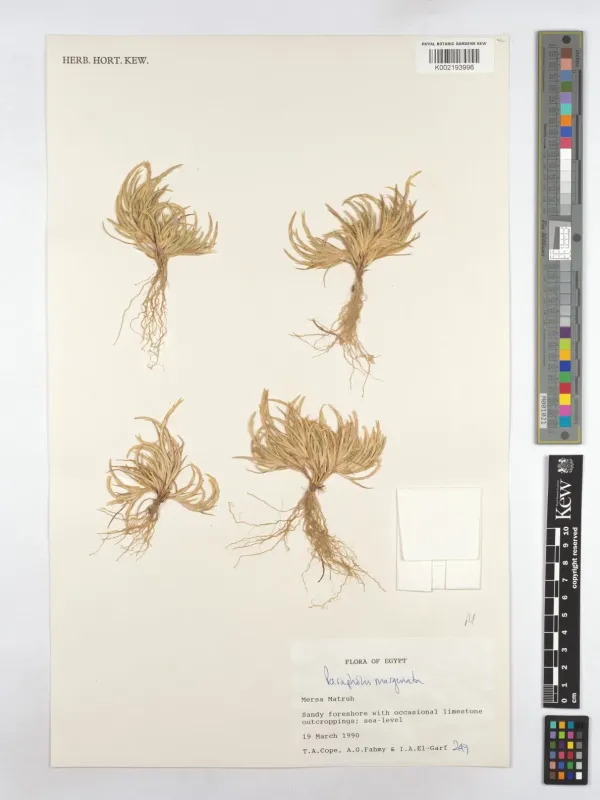
Description
Sowing dates
Parapholis marginata is well-adapted to Mediterranean climate cycles, where germination typically occurs during the autumn and winter months, aligning with natural rainfall patterns.
For agricultural purposes, seeding is best performed in the early autumn. This allows the plants to establish a robust root system before the onset of winter dormancy, facilitating vigorous spring growth.
Given the small size of the seeds, shallow sowing at a depth of 1-2 centimeters is essential. Following the sowing, soil compaction is recommended to ensure optimal seed-to-soil contact.
In regions susceptible to harsh winters, undersowing into an existing sward is a common practice. This strategy provides necessary shelter for seedlings and protects them from extreme temperature fluctuations.
Seeding rates should be adjusted based on the target density of the pasture. Higher rates are generally preferred when the goal is to create a dense, productive grazing sward from the very first season.
Growing requirements
This grass species is highly valued for its salt tolerance, making it an excellent choice for reclamation projects and grazing on coastal, saline soils that are unsuitable for conventional forage crops.
It thrives in environments with adequate winter and spring moisture. Sustained drought during the peak growing season can significantly limit the vegetative biomass production of the plant.
Parapholis marginata is not demanding regarding soil texture but performs best on loamy and clay-heavy soils. These soil types are beneficial for retaining the moisture required for the plant's development.
High light exposure is a critical requirement. The species is intolerant of shading, meaning that it must be managed in open areas to avoid competition from faster-growing weeds or tall forage species.
Mild temperatures are ideal for its development. Sudden temperature spikes during the early spring can potentially disrupt the growth cycle and negatively impact overall biomass accumulation.
Yield
The yield of Parapholis marginata is largely determined by rainfall distribution during the spring months. In seasons with favorable moisture, the plant produces substantial forage biomass.
This species is highly resilient to grazing, demonstrating a rapid recovery rate. It serves as a vital component of the forage chain in the early spring when other grasses may not yet be available.
Biomass production tends to decline significantly as temperatures rise and the plant shifts its energy from vegetative growth to reproductive development, specifically the production of seeds.
Rotational grazing systems are recommended to optimize yield. Allowing periods of rest between grazing cycles enables the plants to replenish energy reserves in their root systems, ensuring long-term persistence.
Moderate nitrogen fertilization can significantly enhance vegetative growth, provided that soil moisture remains within the optimal range for the species during the active growth phase.
Main diseases and pests
Fungal diseases, including various rust species and powdery mildew, represent the primary threat to this crop. These pathogens typically emerge under conditions of high humidity and poor air circulation.
Cereal flies are the most significant insect pests, causing damage to the growing points of the grass. Such infestations can lead to stem distortion and a decrease in the overall vigor of the stand.
Pest issues often become more pronounced when the plant is stressed by overgrazing or poor soil conditions, highlighting the importance of proper pasture management for disease prevention.
Prevention relies on maintaining an optimal sward density, which encourages air movement and reduces the duration of leaf wetness, thereby discouraging the establishment of fungal pathogens.
Chemical control on pasture lands is rarely an economically viable option; therefore, agronomists focus on preventative cultural practices, such as balanced stocking rates and strategic grazing intervals.
Harvesting
Seed harvesting must be timed with precision, as Parapholis marginata seeds are prone to shattering. Collection should commence as soon as the flower spikes reach a golden-brown maturity.
For hay production, mowing is best executed at the onset of the flowering stage. Harvesting at this point captures the best balance between dry matter yield and the nutrient content of the forage.
Mechanized harvesting requires specialized settings on combine harvesters. Careful calibration of drum speed is necessary to ensure the small seeds are effectively threshed without mechanical damage.
Post-harvest processing includes cleaning and thorough drying of the seed material. Any residual moisture can lead to rapid fungal growth and a significant reduction in seed germination rates.
Storage should be conducted in climate-controlled environments with low humidity. Protecting the seeds from rodents and stored-grain pests is essential to maintain seed viability until the next sowing season.