
Curved sea grass
Parapholis incurva
Description
Growing requirements
Curved sea grass (Parapholis incurva) is a species of grass in the Poaceae family. It is a hardy annual plant recognized for its remarkable ability to thrive in highly saline environments, including coastal salt marshes and inland saline soils.
Native to the Mediterranean region, this species has successfully naturalized across various continents, including Australia and parts of the Americas. It is typically found in habitats where soil salinity prevents the growth of most conventional agricultural crops.
The plant requires ample sunlight and exhibits a life cycle synchronized with seasonal moisture availability. Its physiological adaptations allow it to manage high osmotic pressure, maintaining water balance even when soil conditions are hostile to other vegetation.
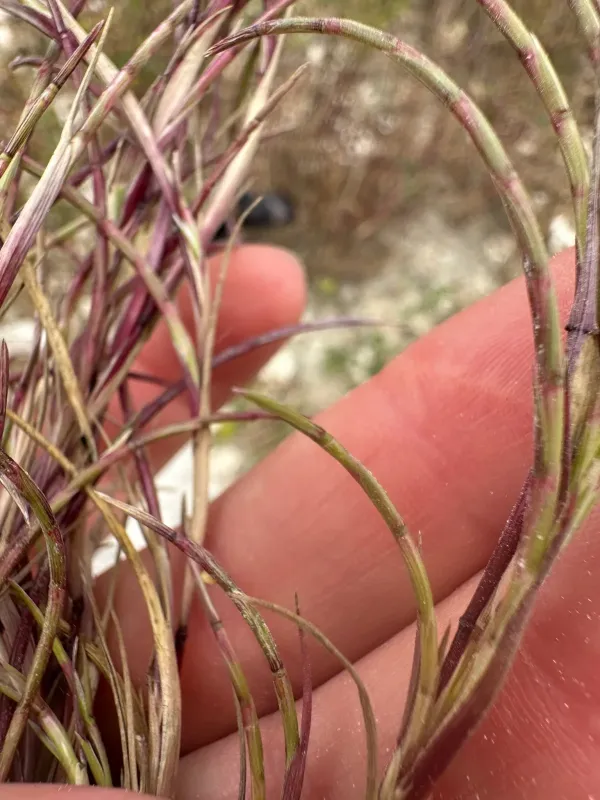
Botanically, it is characterized by slender, often curved stems and cylindrical spikes that appear partially embedded. The leaves are narrow and often rolled inward, a feature that helps reduce transpiration during periods of high environmental stress.
Agrotechnical management is largely passive, as the species is typically managed within the context of extensive grazing systems. Its contribution lies in soil stabilization and its role as a pioneer species in reclaiming degraded saline land.
Harvesting
The primary agricultural utility of Parapholis incurva is as forage for livestock. It is particularly valuable in salt-affected areas where more palatable or productive grass species cannot survive, providing a critical food source for sheep and cattle during specific seasons.
Commercial harvesting of this grass for hay is rarely performed due to the low biomass yield per hectare. Management focus remains on rotational grazing strategies to ensure the plant can flower and set seed for future cycles.
The species excels in self-seeding, which is a key trait for its persistence in harsh environments. Once established, it can form dense mats that protect soil surfaces from erosion caused by wind or water, preserving the integrity of the ecosystem.
Controlled grazing intensity is recommended to prevent overgrazing, which could otherwise lead to soil exposure and degradation. Careful observation of growth phases allows for better timing of livestock movement across saline paddocks.
Furthermore, research into the salt-tolerance mechanisms of this grass holds potential for future crop improvement programs. By understanding its genetic resilience, scientists hope to develop more robust cultivars for agriculture in salt-stressed regions.