
Parlatore's Oat Grass
Helictotrichon parlatorei
Description
Growing requirements
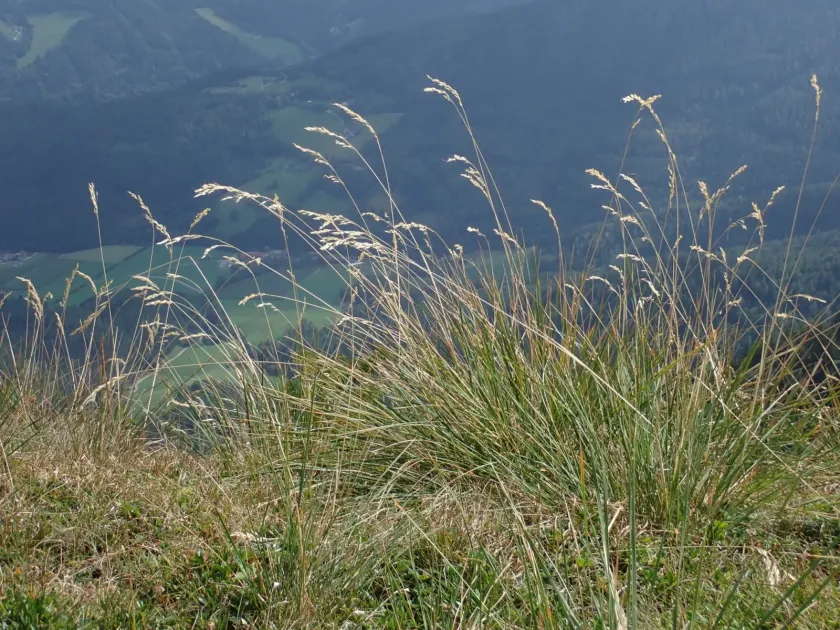
Parlatore's Oat Grass (Helictotrichon parlatorei) is a perennial member of the Poaceae family, specifically adapted to high-altitude alpine and subalpine environments. It typically forms dense clumps, contributing to soil stability on steep mountain slopes.
Native to the mountainous regions of Europe, particularly the Alps, this species thrives in climates with cold winters and short growing seasons. It is highly valued for its ability to survive in environments where extreme temperature fluctuations occur daily.
The botanical structure is characterized by rigid, slender leaves and inflorescences consisting of panicles with distinct, geniculate (bent) awns. The root system is deep and fibrous, allowing the plant to anchor effectively in rocky, limestone-rich soils.
Soil requirements for optimal growth include excellent drainage and high aeration. While it does not demand high nutrient levels, it performs best in soils where minerals are readily available, showing a preference for calcareous substrates common in its native range.
The primary agricultural use of this species is as a forage component in mountainous regions. It provides a reliable source of green mass for grazing livestock, such as sheep and goats, which are often raised in areas where more intensive agriculture is impossible.
Main diseases and pests
Pathogenic fungi, including rusts and powdery mildew, represent the most significant threat to the health of the crop. These diseases are more prevalent in areas with high humidity and poor air circulation within the grass stand.
Cereal leaf beetles and various species of dipteran pests can cause damage to the photosynthetic apparatus of the plant. Monitoring of these pests is essential during the early stages of the growing season to prevent significant leaf area reduction.
Overgrazing poses a severe long-term threat to the population of this grass. Excessive pressure from livestock limits the plant's ability to store carbohydrates in the roots, leading to a decline in vitality over successive years.
Environmental stress, particularly prolonged droughts combined with high solar radiation, can lead to physiological damage. This weakens the plant's immune system, making it more susceptible to secondary viral or bacterial infections.
Integrated pest management strategies are recommended, focusing on maintaining balanced biodiversity within the grassland. By promoting natural predators of common pests, farmers can effectively control damage without the need for intensive chemical inputs.