
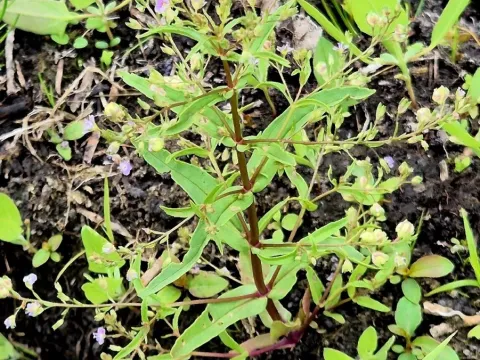
Veronica anagalloides
Veronica anagalloides
Veronica anagalloides is a perennial herbaceous plant belonging to the Plantaginaceae family. It is distinct in its affinity for aquatic and semi-aquatic habitats, making it a specialized species within its genus.
What the section contains
Veronica anagalloides
Botanically, the plant features glabrous, succulent-like stems that often root at the nodes. The foliage is typically lanceolate and opposite, providing a dense cover when grown in optimal conditions with sufficient moisture.
The crop requires moist, nutrient-rich soils and thrives in riparian zones. It is highly adapted to areas that experience periodic flooding, where it can outcompete less water-tolerant vegetation due to its unique physiological adaptations.
Climate-wise, it favors cool to moderate temperatures. It is not a drought-tolerant crop; therefore, irrigation management or natural water table maintenance is essential for sustaining healthy growth throughout the season.
In practical terms, it serves as an excellent candidate for wetland rehabilitation and soil stabilization. Its dense root system helps maintain the structural integrity of banks, preventing sediment runoff into adjacent water bodies.
This species may be susceptible to mildew and fungal infections under conditions of high humidity and poor airflow. Proper site selection and avoiding overcrowding are primary cultural practices for disease management.
Insects like aphids and leaf-eating beetles can cause damage if populations are left unchecked. Integrated pest management, focusing on biological controls and manual monitoring, is the preferred approach for maintaining crop health.