
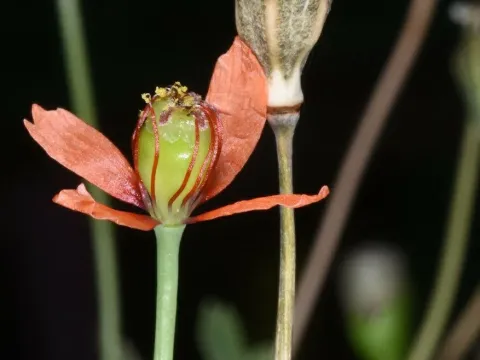
Decaisne's poppy
Papaver decaisnei
Decaisne's poppy (Papaver decaisnei) is a herbaceous plant belonging to the Poppy family (Papaveraceae). In its natural habitat, this species grows primarily in the mountainous regions of Western and Central Asia.
What the section contains
Decaisne's poppy
This crop prefers open, well-lit areas with moderate moisture. The plant is characterized by a high degree of adaptability to rocky and sandy soils, which stems from its evolutionary origin in semi-desert and foothill landscapes.
The optimal temperature range for the normal development of the species is between +18 and +25 degrees Celsius. An essential condition for a full vegetative cycle is the absence of excessive water stagnation in the root zone, which can lead to fungal infections.
In terms of agricultural practice, the crop is demanding regarding soil structure: it must be loose, with good aeration and a neutral or slightly alkaline pH. Heavy clay substrates are considered unsuitable for the commercial cultivation of this poppy.
Biologically, Decaisne's poppy is distinguished by its basal rosettes of pubescent leaves and solitary flowers with a characteristic petal structure. Genetic purity of the species is maintained through isolation from other members of the Papaver genus, which is important for seed production.
Sowing is primarily carried out in the spring period, once the soil has warmed up to 8-10 degrees Celsius at the seeding depth. In southern regions, winter sowing is possible, which contributes to better seed stratification.
The seeding depth should not exceed 0.5–1 cm, as poppy seeds are tiny and require good contact with the moist soil layer. Row spacing in field cultivation is recommended to be maintained between 30 and 45 centimeters.
For uniform seed distribution during mechanized sowing, seeds are often mixed with an inert carrier, such as sand or dry sawdust. This helps avoid overcrowding of crops and the subsequent exhaustion of the plants.
The first seedlings appear 10–14 days after sowing, provided there is sufficient rainfall. During the initial growth period, the crop is extremely sensitive to competition from weeds, so high-quality pre-sowing soil preparation is mandatory.
The seeding rate is calculated based on seed germination percentage and the planned plant density per hectare. It is recommended to use calibrated seed material with high germination energy to obtain uniform emergence.
The main phytosanitary risks for Decaisne's poppy are associated with the development of root rots that occur when the soil is waterlogged. Fungal pathogens can spread rapidly in dense stands.
Crops can also be affected by powdery mildew during periods of high humidity and significant fluctuations between day and night temperatures. For prevention, timely thinning and adherence to crop rotation are recommended.
Pests that pose the greatest threat include the poppy weevil and aphids, which feed on the sap of young leaves and flower buds. Damage by these insects reduces the overall vitality of the plant and the quality of the seed stock.
To combat pests within an integrated pest management system, biological preparations and selective insecticides are used. It is crucial to perform treatments before the mass flowering phase to avoid the death of pollinators.
Preventive measures include:
- maintaining spatial isolation from other poppy species;
- eradicating weeds that serve as virus reservoirs;
- careful selection of crop predecessors to exclude the accumulation of specific soil-borne infections.