
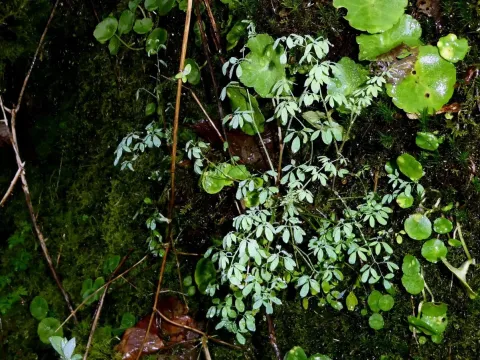
Ceratocapnos
Ceratocapnos
Ceratocapnos is a genus of climbing plants belonging to the Papaveraceae family. While not a primary agricultural crop, it is highly valued in horticulture for its delicate foliage and unique flowering habit, making it an excellent candidate for ornamental vertical gardening.
What the section contains


Ceratocapnos
Sowing should take place in early spring once the risk of severe frost has passed and the soil begins to warm. Seeds are small and require a shallow planting depth of approximately 0.5 centimeters to ensure successful germination.
For indoor propagation, sowing in trays during late winter allows for stronger transplants by the time the outdoor season begins. Maintaining a constant temperature of around 18 degrees Celsius is ideal for uniform seedling emergence.
Once seedlings develop their first set of true leaves, they can be hardened off and moved to their permanent outdoor location. Providing a rich, well-draining substrate is vital for establishing a healthy root system early in the plant's life cycle.
Spacing is essential to prevent overcrowding, which can inhibit growth. A distance of 30 to 45 centimeters between plants is recommended to facilitate optimal airflow and light penetration across the entire foliage canopy.
This plant thrives in temperate climates and prefers spots that receive partial sun or filtered light. While it can tolerate full sun in cooler regions, it benefits from light afternoon shade in hotter climates to prevent leaf desiccation.
Soil quality is paramount for Ceratocapnos. It requires well-draining, nutrient-rich soil that mimics a forest edge environment. Amending the soil with organic matter such as compost or peat can significantly enhance the plant's vigor.
Regular watering is required to maintain consistent soil moisture. However, it is crucial to avoid waterlogging, as the root systems of these plants are susceptible to fungal rot when subjected to prolonged saturation.
Providing structural support is necessary for this climbing species. Using trellises, netting, or natural fencing encourages the plant to climb upwards, which improves overall plant health by reducing ground-level moisture issues.
Nutrient supplementation should be balanced, using a fertilizer with a lower nitrogen ratio to encourage flowering rather than excessive vegetative growth. Applying fertilizer every three to four weeks during the growing season is generally sufficient.
Pest issues are primarily limited to soft-bodied insects like aphids and spider mites, which can thrive in low-humidity environments. These pests primarily target tender young growth and the undersides of leaves.
Fungal diseases, including powdery mildew, are the most frequent health threats for this species. These issues often arise due to poor ventilation or high humidity trapped within the dense foliage of the climbing vines.
Integrated pest management strategies are recommended, focusing on early detection and the use of horticultural soaps or oils to manage outbreaks. Avoid high-pressure water sprays that could physically damage the delicate climbing stems.
Cultural control, such as thinning out dead or overcrowded stems, is the most effective way to prevent disease outbreaks. Removing plant debris from the base of the plant further reduces the risk of overwintering pathogens.
In cases of severe infestation or disease, targeted pruning of affected areas is necessary. This prevents the spread to healthy parts of the plant and stimulates new, vigorous growth that is often more resilient to future attacks.