
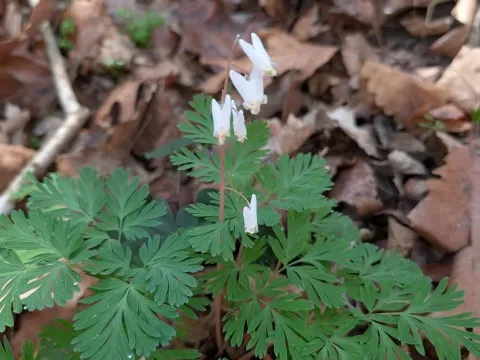
Dicentra
Dicentra Bernh.
Dicentra is typically propagated vegetatively, as seed cultivation is time-consuming and often fails to produce plants identical to the parent. The most effective time for dividing rootstocks is early spring or early autumn, during the dormant season.
What the section contains
 Dicentra eximia x Dicentra peregrina
Dicentra eximia x Dicentra peregrina
Dicentra eximia x Dicentra peregrina
 Dicentra hybrid
Hybrids between Dicentra formosa and Dicentra peregrina
Dicentra hybrid
Hybrids between Dicentra formosa and Dicentra peregrina
 Dicentra peregrina
 (J.H.Rudolph) Makino
Dicentra peregrina
Dicentra peregrina (J.H.Rudolph) Makino
 Dutchman's breeches
Dicentra cucullaria (L.) Bernh.
Dutchman's breeches
Dicentra cucullaria (L.) Bernh.
 Fringed bleeding heart
Dicentra eximia (KerGawl.) Torr.
Fringed bleeding heart
Dicentra eximia (KerGawl.) Torr.
 Pacific bleeding-heart
Dicentra formosa (Andrews) Walp.
Pacific bleeding-heart
Dicentra formosa (Andrews) Walp.
Dicentra
When dividing, the rootstock is carefully lifted and cut into sections about 10–15 centimeters long. Each segment must possess at least two or three healthy buds to ensure successful regrowth in the following season.
To prevent rot, cut surfaces should be treated with charcoal or a fungicide before planting. The sections are placed in holes about 20 centimeters deep, ensuring enough space between plants for proper air circulation.
Seeds can be sown in the autumn directly into the ground or in pots indoors during late winter. Germination is irregular, requiring constant soil moisture and a temperature of approximately 18–20 degrees Celsius.
Seedlings develop slowly and require protection from intense direct sunlight during their first year. Flowering usually begins only in the second or third year after sowing, which is a major factor to consider for commercial production.
Belonging to the Papaveraceae family, Dicentra thrives best in partial shade, although it can tolerate sunny locations provided there is sufficient moisture. It prefers fertile, well-draining, and humus-rich soil with a neutral pH.
Water management is crucial; the plant dislikes waterlogged soil, which can lead to root rot. However, persistent drought during the summer can cause the foliage to yellow and die back prematurely.
The plant is relatively hardy, but in colder climates, a layer of mulch—such as leaf mold or peat—is recommended before winter. This protects the crown from extreme frost fluctuations.
Regular fertilization is beneficial for vigorous growth. Organic fertilizers like compost or well-rotted manure are applied in the spring, while balanced mineral fertilizers can be added just before the flowering stage.
Good soil aeration is necessary for the root system to breathe. If the soil is heavy or clay-based, it is essential to incorporate sand or organic material to improve drainage before planting the rootstocks.
Gray mold (Botrytis) is a frequent problem in humid conditions, often appearing as a fuzzy growth on stems and leaves. Removal of infected parts and proper spacing are the best defensive measures.
Viral infections may cause foliage distortion or mosaic patterns, significantly weakening the plant. Since these diseases are not curable, the best approach is to prevent them by controlling insect vectors like aphids.
Aphids are the most common pests, sucking sap from tender new growth. Prompt application of systemic insecticides is recommended to prevent the spread of the colony and avoid damage to the flower buds.
Slugs and snails can cause significant damage to young leaves, especially in damp spring weather. Barriers or bait can be used to protect the plants during the most vulnerable early stages of growth.
Root rot occurs primarily due to poor soil drainage or overwatering. If the plant shows signs of wilting despite regular care, it is advisable to inspect the roots and improve the site's drainage before replanting.
Dicentra is primarily grown for its ornamental value in gardens and landscaping. After the foliage begins to wither naturally in the autumn, it should be trimmed back to within 5 centimeters of the ground.
For cut flower use, stems are harvested when the buds are half-open. They maintain their decorative quality for about a week if the water is changed daily and the stem ends are refreshed.
When preparing rootstocks for propagation, they should be cleaned of soil and debris, then stored in a cool, dark place (approx. 3-4°C). Keeping them in damp moss or sand prevents dehydration during winter.
Proper seasonal management, including cutting back the stems and applying a fresh layer of mulch, ensures that the plant remains vigorous and productive for many seasons to come.
In landscaping, the plant serves as a perfect backdrop or specimen in shade gardens. Its longevity is directly linked to the health of the rhizomes and the quality of the soil environment maintained over time.