
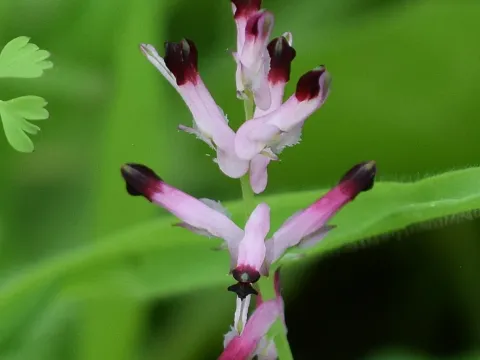
Common ramping-fumitory
Fumaria muralis
The common ramping-fumitory is an annual herbaceous plant whose seeds typically germinate during the autumn or early spring seasons when soil moisture is sufficient.
What the section contains
Common ramping-fumitory
For intentional cultivation, seeds should be sown at a shallow depth of approximately 1-2 centimeters, as they require soil contact and specific moisture levels to break dormancy.
The species exhibits high germination energy, allowing it to establish itself rapidly in favorable conditions, often behaving as a significant agricultural weed.
Biological adaptation to temperate climates dictates that sowing should coincide with periods of moderate temperatures to ensure consistent seedling development.
Proper spacing is crucial when managing this species, as its branching stems require enough air circulation to support robust vegetative growth throughout the season.
Fumaria muralis belongs to the Papaveraceae family and favors well-drained, nutrient-rich soils with a neutral or slightly acidic soil reaction.
While highly adaptable to various soil textures, including loams and sandy soils, the plant strictly requires conditions free from persistent waterlogging to prevent root damage.
The plant is categorized as heliophilic but maintains a notable tolerance for partial shade, making it a versatile species in various ecological niches.
Climatic requirements favor moderate humidity levels; extreme heat can induce seed dormancy, while frost might limit growth during the peak of the winter months.
Naturally occurring in disturbed habitats, such as garden borders and arable fields, the plant reflects a high tolerance for sites impacted by human agricultural activity.
Common ramping-fumitory is prone to powdery mildew infections, particularly in environments with high humidity and stagnant air conditions.
Aphid populations represent the primary biological threat, as they frequently colonize young stems and flowers, compromising the plant's structural integrity.
Root systems may face damage from soil-dwelling larvae, such as wireworms, particularly when the site was previously occupied by sod or perennial grasses.
Leaf-feeding caterpillars, specifically from various noctuid moth species, can cause substantial defoliation during the active growing season.
- Powdery mildew
- Aphids
- Wireworms
- Noctuid caterpillars
Harvesting the common ramping-fumitory for medicinal applications is best performed during the peak flowering stage to ensure the highest concentration of active alkaloids.
The aerial portions are typically harvested by cutting the stems about 5-10 centimeters above the soil surface, ensuring the base remains healthy for potential regrowth.
Drying must be conducted promptly in a shaded, well-ventilated area to prevent discoloration and the degradation of phytochemical constituents.
Dried material should be stored in opaque, airtight containers in a cool, dry place to maintain stability and medicinal efficacy for up to two years.
When utilized as a green manure or cover crop, the plant must be incorporated into the soil before seed set to prevent the uncontrolled dispersal of future populations.