
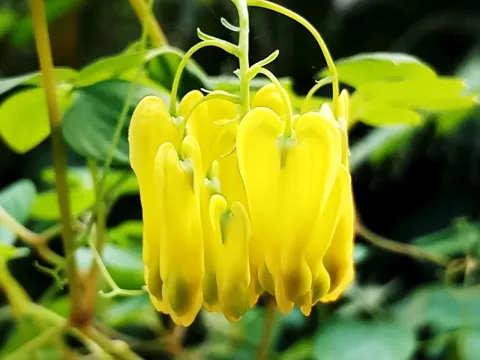
Dactylicapnos
Dactylicapnos
The sowing of Dactylicapnos seeds is primarily carried out in the spring, once the threat of night frosts has passed. For earlier flowering, it is recommended to use the seedling method, sowing seeds into loose substrate in late March or early April.
What the section contains

Dactylicapnos
The optimal temperature for seed germination is 18–20 degrees Celsius. Seeds should be lightly covered with soil, as they require minimal light access, but it is necessary to maintain stable moisture levels until seedlings emerge.
When sowing directly into open ground, it is important to ensure the absence of weeds, which can inhibit young plants during their initial development phase. The soil should be pre-loosened and structured to improve root aeration.
Pricking out of seedlings is performed when two true leaves appear. The plants are quite fragile, so transplanting into the ground should be done with maximum preservation of the root ball to avoid root damage.
A planting density of 40–50 centimeters between plants is recommended, which provides sufficient feeding area and prevents excessive overcrowding, which can encourage the development of fungal infections.
Dactylicapnos, belonging to the Papaveraceae family, prefers semi-shaded areas with protection from direct noon sun. The plant is sensitive to soil overheating, so the root zone requires mulching.
The crop has high requirements for soil fertility. It develops best in light, humus-rich loams with a neutral or slightly acidic reaction, which retain moisture well but prevent waterlogging.
During the active vegetation period, the plant needs regular but moderate watering. Excessive moisture combined with low temperatures can lead to rotting of the root system and stems.
For normal growth, the vine needs a reliable support. The plant’s tendrils actively cling to any vertical surfaces, allowing it to be used for landscaping gazebos, trellises, or pergolas in a garden setting.
The plant has moderate frost resistance, so in regions with harsh winters, it requires protection or is grown as an annual. In a mild climate, the aerial part may die back, regenerating in the spring from the rhizome.
The main pests affecting Dactylicapnos are aphids and spider mites, which reproduce rapidly in dry and hot weather conditions, sucking juices from young shoots.
Under conditions of waterlogging and poor ventilation, fungal leaf spots and powdery mildew can develop. Prevention involves strict adherence to the watering regime and timely weeding.
Root rots are the most dangerous diseases. They occur during improper soil preparation if the soil is too heavy and does not provide quick drainage of excess water away from the plant roots.
To control pests, systemic insecticides or biological preparations based on plant extracts are used, provided they are applied in a timely manner before the vine is mass-infested.
Regular inspection of the underside of the leaves allows for the detection of pest colonies at early stages, which significantly reduces the need for aggressive chemical protection agents.