
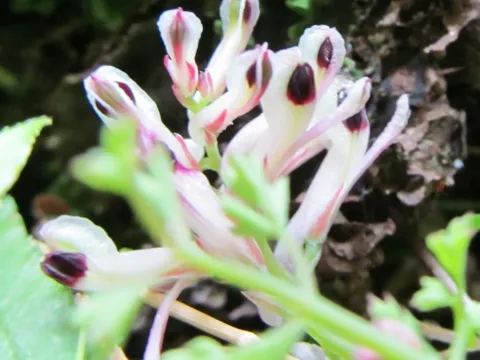
Common fumitory
Fumaria agraria
Common fumitory (Fumaria agraria) is an annual herbaceous plant belonging to the Fumariaceae family (often classified within Papaveraceae). In an agricultural context, it is predominantly recognized as a weed that infests various types of crops, competing for resources and affecting total field productivity.
What the section contains
Common fumitory
The plant originates from the Mediterranean region and has spread across various temperate zones. It is typically found in cultivated fields, gardens, and along field margins, where it thrives in fertile, well-drained soils that offer sufficient sunlight throughout the growing season.
Botanically, Fumaria agraria is identified by its branched stems reaching heights of 20 to 40 centimeters. Its leaves are pinnate and finely divided, providing a distinct appearance. The plant produces dense clusters of small, pinkish-white flowers, which are key diagnostic features for its identification in the field.
Regarding climatic requirements, the plant prefers moderate temperatures and is well-adapted to mild winters and warm springs. It demonstrates high environmental plasticity, allowing it to establish itself in various soil types, provided that competition from other vegetation is not too intense during its early growth stage.
While historically used in traditional herbal medicine for its alkaloid content, it holds no significant status as a commercial crop. In modern agriculture, it is viewed as a persistent weed that necessitates proactive management to minimize its negative impact on food and industrial crop yields.
The primary threat posed by common fumitory is its ability to aggressively compete with crops for nitrogen, phosphorus, and moisture. This nutrient depletion often leads to stunted growth in cereals and vegetable crops, significantly reducing the quality and quantity of the harvest.
As a host plant, it may harbor various pests and pathogens that can spread to cultivated crops. This ecological interaction necessitates regular field scouting and the implementation of integrated pest management strategies to protect the farm's investment.
Chemical control remains a common practice, with selective herbicides used to manage its population. It is crucial to apply these treatments at the correct growth stage of the weed to maximize efficacy while ensuring the safety of the desired crop plants.
Cultural practices, such as proper crop rotation and the use of certified seed stock, are essential to prevent the accumulation of weed seeds in the soil. These methods help break the life cycle of Fumaria agraria and reduce the weed pressure over multiple growing seasons.
Mechanical control through inter-row cultivation or harrowing is highly effective when performed early. By destroying the seedlings before they reach maturity, farmers can significantly improve the overall conditions of the crop canopy and ensure optimal development of the agricultural product.