
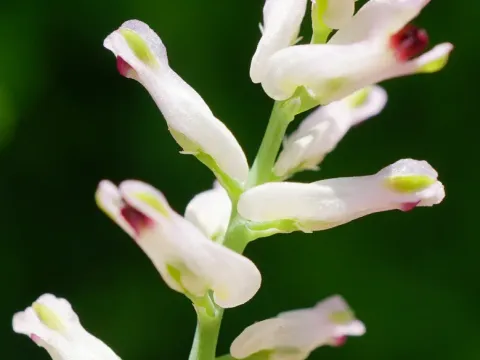
Fumaria
Fumaria
Fumaria, commonly known as fumitory, is an annual herbaceous plant belonging to the Papaveraceae family. While often categorized as a field weed, it is also cultivated for pharmaceutical use.
What the section contains


Fumaria
Sowing typically takes place in early spring, as soon as the soil temperatures rise to 5-8 degrees Celsius, which is optimal for uniform seed germination.
The seeds are small and should be sown at a shallow depth of approximately 1-2 centimeters in well-prepared, fine-textured seedbeds to ensure consistent emergence.
Proper spacing between rows is essential for weed control and adequate airflow, which is critical for reducing humidity levels around the foliage.
The plant demonstrates a rapid growth cycle, often completing its development from seedling to maturity within a relatively short period, making timely management necessary.
Fumitory thrives in fertile, well-drained loamy or sandy soils with a neutral pH. It performs best in environments where moisture is maintained at a moderate, consistent level.
It is a sun-loving plant that requires full exposure to natural light for maximum biomass production; shading significantly decreases the concentration of active compounds.
The crop is relatively hardy, capable of tolerating mild frost in the early stages of development, which makes it suitable for various temperate climate zones.
Proper drainage is paramount as the plant is susceptible to root diseases if standing water is present for prolonged periods, especially in heavy clay soils.
Regular cultivation and weeding are required to ensure the crop is not choked by more aggressive competitive plant species during the early growth stages.
The most common disease impacting fumaria is powdery mildew, which thrives in high-humidity conditions with restricted air movement, leading to leaf drop.
Aphids represent the primary insect threat, as they colonize the tender tips of the plant, causing distortion of leaves and potentially transmitting viral pathogens.
Pest control should prioritize integrated pest management (IPM) strategies to avoid synthetic chemical residues, which is crucial for medicinal-grade crop production.
Crop rotation helps break the cycle of soil-borne pathogens and minimizes the buildup of weed seeds in the seed bank of the field.
Effective hygiene practices, including the removal of infected plants, can significantly reduce the pressure of secondary fungal pathogens throughout the season.
The harvesting of the medicinal herb is carried out during the peak flowering period, as this is when the content of bioactive alkaloids is at its maximum.
Plants should be cut above the soil line, ensuring that no roots or soil particles are included in the harvested batch to maintain purity standards.
Post-harvest processing involves immediate drying in a shaded, well-ventilated area to preserve the integrity of the essential secondary metabolites.
Temperatures during the drying process should be strictly controlled, not exceeding 45 degrees Celsius, to prevent the degradation of heat-sensitive compounds.
Once dried, the herb should be stored in opaque, moisture-proof containers to protect it from light and environmental humidity during long-term storage.