
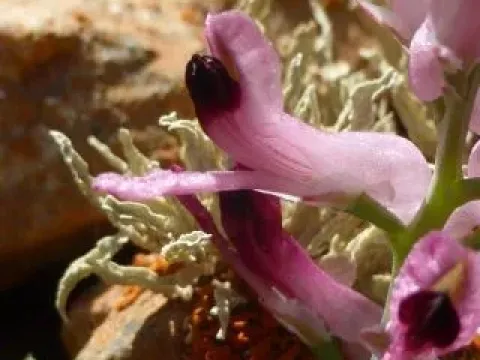
Fumaria rupestris
Fumaria rupestris
Fumaria rupestris is an annual herbaceous plant belonging to the Papaveraceae family. In agricultural practice, seeds are typically sown in late autumn, as they require natural stratification to achieve optimal germination rates during the spring.
What the section contains
Fumaria rupestris
For spring planting, the soil should reach a temperature of approximately 10 to 12 degrees Celsius. Seeds are sown at a shallow depth of 1 to 2 centimeters to ensure adequate oxygen access, which is crucial for the germination of this small-seeded species.
A row spacing of 30 to 45 centimeters is recommended, providing enough space for the plant to develop its aerial parts effectively. Seeding density is adjusted based on the intended purpose, whether for biomass production or seed multiplication.
Uniform soil moisture is vital during the emergence phase. Producers should avoid soil compaction to ensure the root system establishes properly within the first few weeks after the seedlings emerge.
Weed control is essential in the early stages of growth, as the plant is sensitive to competition. Mechanical weeding between the rows is the most effective approach before the crop canopy closes.
This crop thrives in well-lit areas, as shade causes excessive stem elongation and reduces the accumulation of secondary metabolites. Fumaria rupestris is naturally adapted to stony, well-drained substrates.
The soil should have a light mechanical composition with excellent aeration and moderate nutrient content. Waterlogging is detrimental to the root system, making fields with high water tables unsuitable for this specific crop.
A neutral to slightly alkaline soil pH is preferred. In overly acidic soils, the plant exhibits stunted growth and reduced flowering, which negatively impacts the pharmaceutical value of the final harvest.
During active vegetation, temperatures between 18 and 25 degrees Celsius are ideal. While the plant has moderate drought tolerance, supplementary irrigation during prolonged dry spells helps maintain the juiciness of the stems.
Fumaria rupestris shows good resilience to diurnal temperature fluctuations, making it a viable candidate for cultivation in varied climatic zones, provided that the soil conditions meet its requirements.
The yield of green biomass depends heavily on soil preparation and nitrogen management. Balanced mineral fertilization during early vegetative stages significantly enhances the overall output of the plant.
Under favorable conditions, yields can reach up to 5–8 tonnes of raw mass per hectare. Once dried, the output of finished medicinal raw material is approximately 20–25 percent of the initial fresh weight.
Harvesting at the peak of flowering is critical, as alkaloid concentrations reach their maximum at this stage. Delayed harvest results in lower quality and an increase in fiber content, reducing the commercial value.
Regular monitoring of the crop allows for adjustments in agricultural techniques, which can lead to a 15–20 percent increase in productivity. Effective management of soil fertility is the key to consistent yields.
Seed collection for future cycles is performed after full maturation, when the seed pods have dried out sufficiently to allow for easy mechanical harvesting or manual gathering.
Fungal diseases, especially powdery mildew, represent the most significant threat to this crop when moisture levels are high. These pathogens can rapidly affect leaves and stems, compromising the quality of the product.
Aphids are the primary pests that damage the crop by feeding on the sap of young shoots, causing deformation and growth retardation. Early intervention is necessary to prevent significant yield losses.
Preventative measures include strict crop rotation and avoiding overly dense plantings that create favorable microclimates for pests and diseases. Eliminating weeds that act as pest reservoirs is also vital.
Integrated pest management strategies focusing on biological control are preferred over synthetic pesticides, as the crop is intended for the production of herbal medicines. Chemical treatments are a last resort.
Proper field hygiene, including the removal of crop residues, helps break the lifecycle of common soil-borne pathogens, ensuring a healthier crop and higher yields in subsequent seasons.
Harvesting is performed during the mass flowering phase, ensuring that the harvested material contains the highest possible level of active components required for medicinal use.
Mechanical harvesting should be carried out in dry weather. If the material is collected while wet, the risk of rapid spoilage and the development of mold during the transport and drying phase increases significantly.
Drying is performed in well-ventilated facilities at temperatures not exceeding 45 degrees Celsius. Exceeding this temperature can lead to the degradation of essential chemical compounds within the plant.
Post-drying, the material undergoes purification to remove impurities and soil particles. Ensuring a clean final product is essential for meeting industry standards for herbal raw materials.
Storage must be in a cool, dark, and dry environment. Protection from direct sunlight, humidity, and pests is crucial for maintaining the shelf life and potency of the dried product for several months.