
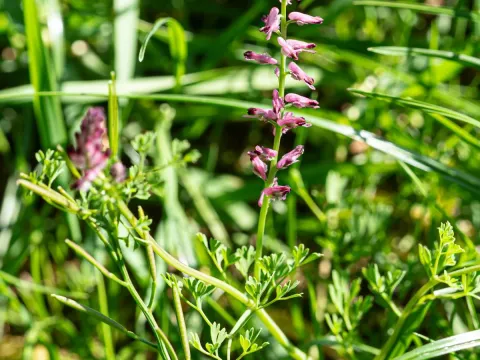
Fumaria rostellata
Fumaria rostellata
Fumaria rostellata, commonly known as a type of fumitory, belongs to the Papaveraceae family. It is recognized as an annual herbaceous plant that frequently infests agricultural landscapes, particularly in temperate regions.
What the section contains
Fumaria rostellata
The plant thrives in fertile, well-drained soils with moderate moisture levels. It is highly adapted to soils with a neutral or slightly alkaline pH, often appearing in cultivated fields that are rich in nitrogenous organic matter.
Geographically, it is distributed across various European and Western Asian landscapes. It requires open spaces with minimal competition to reach its full reproductive potential, often appearing in the spring season.
Botanically, it is characterized by finely dissected foliage and delicate pinkish flowers arranged in racemes. Its growth habit is typically straggling or climbing, allowing it to weave through neighboring vegetation.
Climatic requirements involve mild temperatures, as extreme frost or heat can inhibit its germination cycle. However, the seeds possess a high degree of dormancy, allowing the population to persist in the soil seed bank for several years.
While not a primary disease vector, Fumaria rostellata can harbor aphids, which act as vectors for various mosaic viruses affecting vegetable crops. Controlling this weed is essential for maintaining crop health.
The plant can be susceptible to powdery mildew under conditions of poor ventilation and high humidity. This fungus can easily jump from the weed to nearby crops, causing significant yield losses in sensitive species.
Pest pressures are generally low; however, generalist herbivores such as caterpillars and beetles may graze on the foliage. While this rarely kills the weed, it can stimulate compensatory growth.
Integrated weed management is the standard approach for control. This includes crop rotation, which breaks the lifecycle of the weed, and the use of competitive cultivars that shade out the infestation.
Herbicidal control is effective when applied during the early vegetative growth phase. Selecting the right post-emergence herbicide is crucial to ensure efficacy without damaging the primary agricultural crop.