
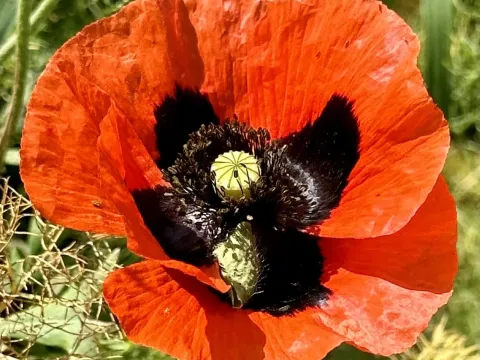
Caucasian poppy
Papaver commutatum
The Caucasian poppy (Papaver commutatum) is an annual herbaceous plant belonging to the Papaveraceae family. Originally from the mountainous regions of the Caucasus and Northern Iran, it has adapted to rocky, well-drained habitats.
What the section contains
Caucasian poppy
The ideal sowing time is early spring, as soon as the soil temperatures rise above freezing. Direct sowing in autumn is also possible in milder climates, which encourages earlier germination during the first spring warm spells.
Because the seeds are extremely small, they require surface sowing. They should be pressed gently into the soil without being covered by a thick layer of earth, as they need light to germinate successfully.
To ensure healthy plant development, thinning is required once seedlings reach a height of 5–10 cm. Maintaining a spacing of approximately 25 cm between individual plants helps reduce competition for nutrients and sunlight.
This species is highly regarded for its deep red flowers, each featuring a dark purple-black spot at the base of the petals, making it a distinctive ornamental plant in modern landscaping.
Papaver commutatum thrives in loose, sandy, or stony soils that offer excellent drainage. The species cannot tolerate heavy or waterlogged clay soils, as these lead to root rot and premature plant death.
Being a heliophilic plant, it requires full sun exposure to flourish. Placing the crop in shaded areas leads to stunted growth, thin stems, and a significant reduction in flower production.
Watering requirements are relatively low. The plant is drought-tolerant, meaning it is better to underwater than to overwater. Excess moisture in the soil is the most common cause of crop failure.
Minimal soil cultivation is necessary. Regularly clearing the surrounding area of weeds in the early stages of plant development ensures that the poppy receives sufficient access to sunlight and soil resources.
Fertilization should be handled with care. A balanced, low-nitrogen approach is recommended to prevent excessive vegetative growth and to ensure the plant directs its energy toward producing vibrant blooms.
Powdery mildew is the most common fungal threat, typically appearing during periods of high humidity and poor air circulation. Proper plant spacing is the primary cultural practice to prevent outbreaks.
Aphids can cause significant damage to buds and young leaves by sapping nutrients. Monitoring the plants during the early flowering phase is crucial for early detection and intervention.
Root rot, driven by stagnant water, can devastate entire plots. Ensuring that the soil remains well-drained and avoiding irrigation during humid, overcast weather can significantly reduce this risk.
Weed control is essential not only for resource competition but also because many weeds act as alternative hosts for pests that attack poppy crops.
Integrated Pest Management (IPM) practices, including the use of targeted biological controls, are recommended over broad-spectrum chemicals to protect the environment and local pollinator populations.