
Oenothera mollissima
Oenothera mollissima
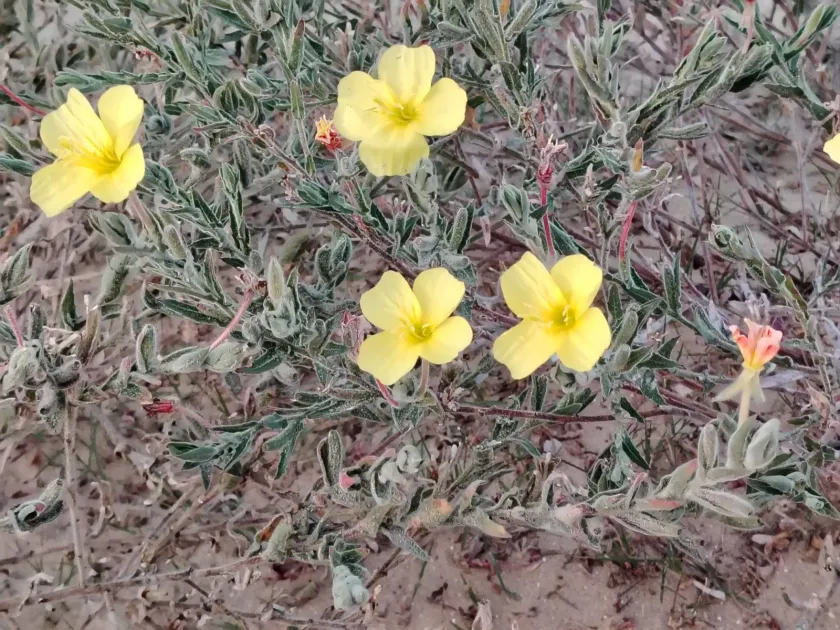
Description
Sowing dates
Oenothera mollissima is a member of the Onagraceae family, recognized for its unique seed composition and potential in oil production.
Sowing should take place in early spring once soil temperatures reach 10-12 degrees Celsius, ensuring favorable germination rates for the crop.
Because the seeds are extremely small, they should be sown at a shallow depth of 1-2 centimeters to ensure adequate moisture contact and oxygen.
Row spacing is typically set between 45 and 60 centimeters, providing sufficient space for mechanical weeding and promoting healthy plant development.
Effective seed drill calibration is essential to maintain a uniform plant density, which is critical for maximizing field-wide yield potential.
Growing requirements
This crop thrives in well-drained sandy or loamy soils, as it is highly sensitive to waterlogged conditions that can lead to root rot.
As a sun-loving plant, Oenothera mollissima requires full exposure to sunlight to ensure optimal photosynthesis and uniform maturation of the seed capsules.
The plant exhibits significant drought tolerance once established, making it a suitable candidate for cultivation in regions with low seasonal rainfall.
The ideal ambient temperature for growth ranges from 20 to 25 degrees Celsius, allowing the crop to develop robust stems and healthy foliage.
While the plant has modest nutrient requirements, balanced applications of phosphorous and potassium can significantly enhance seed quality and yield.
Yield
The primary economic focus of Oenothera mollissima is its seeds, which are processed into high-value oils for pharmaceutical and cosmetic markets.
Under favorable growing conditions and good management practices, seed yields can reach approximately 500 to 1000 kilograms per hectare.
The oil extracted from the seeds is prized for its high content of fatty acids, specifically gamma-linolenic acid, which is a major industry driver.
Long flowering periods make this plant a valuable resource for pollinators, indirectly contributing to the overall ecological balance of the farmland.
Strategic post-harvest handling is necessary to maintain the chemical integrity of the oil, requiring prompt drying and careful storage conditions.
Main diseases and pests
Soil-borne pests such as wireworms are common threats to young seedlings, potentially causing significant damage during the early establishment phase.
Powdery mildew can become a significant issue during periods of high humidity, necessitating proper plant spacing to improve air circulation.
Aphids can attack developing buds and tender shoots, which may cause stunted growth and reduce the plant's overall reproductive success.
Weed competition is particularly detrimental in the first few weeks of growth when the plant is establishing its root system and slowly gaining biomass.
Implementing an integrated pest management (IPM) strategy is essential to manage threats while protecting beneficial pollinator populations in the field.
Harvesting
Harvesting is a critical operation because seed maturation occurs unevenly along the stalks, creating a high risk of seed loss through shattering.
A two-stage harvesting process, involving cutting into windrows first, is highly recommended to allow for even ripening of the capsules.
Once the capsules reach a brown color and the seeds have hardened, the material is ready to be threshed under controlled mechanical settings.
Precision harvesting equipment is used to minimize mechanical damage to the seeds, preserving their viability and the quality of the derived oil.
Post-harvest cleaning involves removing light debris and chaff to meet commercial standards for seed purity and market readiness.